seolounge

Search engine marketing (SEM) has become an essential part of digital marketing for businesses of all sizes. Whether you run a small local business or a growing enterprise, appearing in front of potential customers when they are actively searching for products or services can make a huge difference to your online growth.
But what exactly is search engine marketing, and how can you use it effectively as part of your overall marketing strategy?
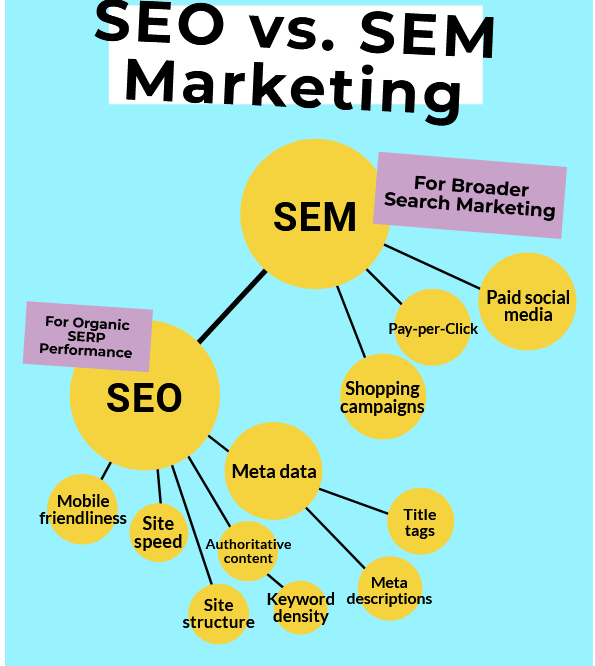
SEM is a broad approach to improving a business’s visibility on search engines. It commonly involves two major areas: Search Engine Optimization (SEO), which focuses on earning organic visibility, and Pay-Per-Click (PPC) advertising, which helps businesses appear in paid search results.
Understanding how these strategies work together can help businesses attract more relevant traffic, generate quality leads, increase conversions, and build a stronger online presence.
Search engine marketing is more than simply getting your website to appear on Google. It is about reaching the right audience at the right moment—especially when potential customers are already looking for information, products, or services related to your business.
For this reason, understanding the benefits of SEM and knowing how to use SEO and PPC effectively can give your business a significant advantage in an increasingly competitive digital marketplace.
Let’s start by describing what SEM is.
What Is Search Engine Marketing?
Search Engine Marketing (SEM) is a broad digital marketing approach that businesses use to increase their visibility and attract more visitors from search engine results pages (SERPs). The main goal is to put your business in front of people who are actively searching for products, services, or information related to what you offer.
SEM can involve several strategies, including paid search advertising, contextual advertising, and organic search optimization. Rather than relying on a single method, it focuses on building a stronger and more complete presence across search engines.
In simple terms, SEM is often used as an umbrella term that brings together Search Engine Optimization (SEO) and Pay-Per-Click (PPC) advertising. SEO focuses on earning visibility through organic search results, while PPC allows businesses to pay for prominent placements on search engine results pages. When used together, these strategies can help businesses reach potential customers at different stages of their buying journey.
How SEO Fits Into SEM
SEO primarily focuses on improving a website so that it can rank higher in organic search results. This involves optimizing website content, improving technical performance, targeting relevant keywords, building authority, strengthening internal links, and creating a better overall user experience.
When a website is properly optimized and provides genuinely useful content, it has a better opportunity to attract visitors from search engines such as Google and Bing without paying for every individual click.
How PPC Fits Into SEM
PPC, on the other hand, gives businesses the opportunity to appear in paid search placements, often near the top of the search results. Advertisers pay when someone clicks on their advertisement, making PPC a useful option for businesses looking to generate targeted traffic and leads more quickly.
The real strength of SEM comes from understanding when to use organic and paid strategies and how to make them work together. SEO can help build sustainable visibility over time, while PPC can provide immediate exposure for important keywords, products, services, or promotional campaigns.
Ultimately, search engine marketing is about more than simply driving traffic. It is about reaching the right audience, at the right time, with the right message, while creating multiple opportunities for potential customers to discover and engage with your business.
Why Is Search Engine Marketing Important?
Search Engine Marketing (SEM) plays an important role in helping businesses increase their online visibility, attract potential customers, and generate more revenue. With so many people turning to search engines to find products, services, and solutions, having a strong presence in search results can give your business a valuable competitive advantage.
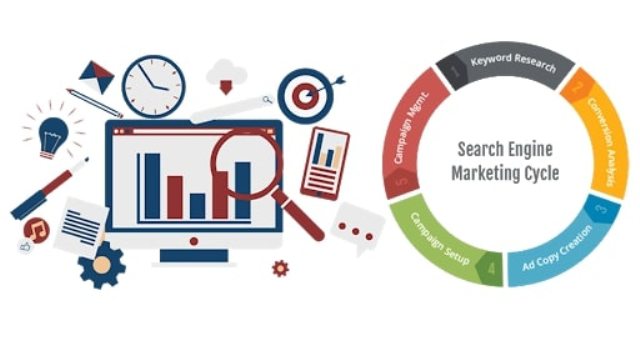
SEM brings together two powerful approaches: Search Engine Optimization (SEO) and paid search advertising. SEO helps businesses build long-term organic visibility, while paid search can deliver targeted exposure and traffic more quickly.
Individually, both strategies can produce impressive results. SEO can gradually build a steady flow of relevant organic traffic, while paid search allows businesses to target specific keywords and audiences with highly focused campaigns.
However, combining SEO and paid search can be even more effective. Businesses can use PPC to capture immediate opportunities while continuing to invest in SEO for sustainable, long-term growth. This combination creates a more balanced search marketing strategy, helping businesses reach customers at different stages of their decision-making journey.
In short, SEM is valuable because it does more than drive website traffic. When planned and managed effectively, it can help increase qualified leads, improve conversions, strengthen brand visibility, and create a consistent source of business growth.
The Advantages of Search Engine Marketing
There are several reasons why Search Engine Marketing (SEM) can be a valuable investment for your business. A stronger presence in search results makes it easier for potential customers to discover your brand, products, and services. As your visibility improves, you can attract more relevant website visitors, generate qualified leads, and create more opportunities to increase sales and revenue.
SEM can also help you provide useful and informative content to your audience. By answering common questions, addressing customer concerns, and offering valuable insights, your website can become a trusted resource within your industry.
SEO vs. PPC: Which One Should You Choose?
One of the most common questions businesses ask is whether they should invest in SEO or PPC. The truth is that there is no single answer that works for every business. The right approach depends on your goals, competition, industry, timeline, and available marketing budget.
Rather than treating SEO and PPC as competing strategies, businesses can use them together to create a stronger search marketing campaign. SEO is particularly effective for building long-term organic visibility, while PPC can help businesses generate targeted traffic and potential customers much faster.
SEO Is Built for Long-Term Growth
Organic SEO is a powerful strategy for businesses that want to establish sustainable online visibility. By consistently improving your website, publishing valuable content, targeting relevant search terms, and building authority, you can gradually increase your organic rankings and attract visitors without paying for every click.
SEO is also often considered a cost-effective marketing channel, particularly for businesses that are willing to invest time and effort into long-term growth. Once your pages begin ranking well, they can continue bringing relevant traffic to your website over an extended period.
PPC Can Deliver Faster Results
PPC advertising is useful when you need immediate visibility. Instead of waiting for organic rankings to improve, you can create targeted campaigns that place your business in front of people searching for specific products or services.
The main difference is that PPC comes with a cost for each click or other defined advertising action, while organic search traffic does not involve a direct cost per click. For this reason, many businesses use PPC to generate short-term opportunities while developing SEO as a long-term acquisition channel.
SEO Helps Build Trust and Credibility
A strong SEO strategy is not simply about reaching the first page of Google. It is also about creating a website that people find useful, trustworthy, and relevant.
When your website consistently provides high-quality content and useful information, it can strengthen your reputation with both users and search engines. Optimizing your pages for relevant keywords also helps search engines understand what your business offers and which searches your content is most relevant to.
Over time, stronger rankings can lead to increased visibility, greater brand recognition, and more qualified organic traffic. The key is to focus on creating genuinely useful content and a positive user experience rather than optimizing your website solely for search engines.
Ultimately, SEO and PPC can serve different purposes, but they work especially well when they are part of the same overall SEM strategy. SEO can help build lasting visibility and credibility, while PPC can provide faster access to targeted audiences. Together, they can create a more balanced and sustainable approach to growing your business online.
Advantages of Search Engine Marketing: Types, Features, Benefits, and Examples
Search Engine Marketing (SEM) has become one of the most effective ways for businesses to reach people who are actively searching for products, services, or solutions online. Unlike traditional advertising, where businesses often reach a broad audience and hope the right people notice, SEM allows brands to appear when potential customers are already showing interest through their search queries.
Whether you run a local business, an e-commerce store, a startup, or an established company, SEM can help you increase online visibility, attract qualified traffic, generate leads, and drive sales.
In this guide, we will explore the advantages of search engine marketing, its major types, key features, benefits, practical examples, and some best practices for creating successful SEM campaigns.
What Is Search Engine Marketing?
Search Engine Marketing refers to digital marketing activities designed to increase a website’s visibility on search engine results pages (SERPs). In most modern marketing discussions, SEM primarily refers to paid search advertising, where businesses pay to display advertisements on search engines such as Google and Microsoft Bing.
For example, imagine someone searches for:
“best digital marketing agency in Ahmedabad”
A digital marketing company running a relevant search advertising campaign may appear near the top of the results. If the searcher clicks the advertisement, the business may have an opportunity to turn that visitor into a lead or customer.
SEM generally works around keywords, audience targeting, bidding, advertisements, landing pages, and conversion tracking.
Why Is Search Engine Marketing Important?
People often turn to search engines when they have a specific need or problem. Someone searching for “emergency plumber near me,” “buy running shoes online,” or “Google Ads agency in India” is already expressing some level of intent. This makes search advertising particularly valuable because businesses can reach potential customers at a moment when they are actively looking for something. SEM can help businesses:
- Reach customers with high purchase intent
- Increase visibility quickly
- Generate targeted website traffic
- Promote specific products and services
- Generate leads and sales
- Control advertising budgets
- Measure campaign performance
- Retarget interested audiences
- Test different marketing messages
- Improve marketing efficiency over time
Types of Search Engine Marketing
SEM is not limited to one type of advertisement. Businesses can use different search advertising formats and strategies depending on their objectives.
Paid Search Advertising
Paid search is one of the most common forms of SEM. Advertisers bid on relevant keywords so their advertisements can appear when users search for those terms. For example, a dental clinic could target keywords such as:
- “dentist near me”
- “dental clinic in Ahmedabad”
- “teeth whitening clinic”
- “root canal treatment”
The business typically pays when someone clicks the advertisement, making this model commonly associated with pay-per-click (PPC) advertising.
Search Ads
Search ads are text-based advertisements that appear on search engine results pages. They usually include elements such as:
- Headline
- Description
- Business name
- Landing page
- Call-to-action
- Additional assets or extensions
For example:
Affordable Digital Marketing Services
Grow your online visibility with SEO, PPC, content marketing, and conversion-focused strategies.
Get a Free Consultation
A well-written advertisement can encourage users to click and explore the business.
Shopping Ads
Shopping ads are especially useful for e-commerce businesses. Instead of displaying only text, these ads can showcase product information such as images, product names, prices, and store details. For example, an online fashion store selling running shoes could use Shopping campaigns to show products to users searching for specific footwear.
Dynamic Search Advertising
Dynamic search advertising can help businesses promote relevant website pages based on the content available on their websites and users’ search queries. This can be particularly useful for businesses with large websites containing many products or service pages.
Local Search Advertising
Local search advertising focuses on reaching customers within specific geographic areas. For example, a restaurant in Ahmedabad could target searches such as:
- “restaurants near me”
- “best family restaurant in Ahmedabad”
- “Gujarati restaurant near me”
This approach is particularly useful for businesses that depend on local customers.
Remarketing and Search Audiences
Remarketing allows businesses to reconnect with people who have previously interacted with their website or digital presence. For instance, someone may visit an e-commerce website, view a product, and leave without buying it. A properly configured advertising strategy can help the business reach that user again with relevant messaging.
Microsoft Search Advertising
Businesses can also use search advertising platforms outside Google, such as Microsoft Advertising, to reach users searching through Microsoft’s search network. This can provide an additional source of targeted traffic and may be valuable for businesses targeting specific audiences or markets.
Key Features of Search Engine Marketing
A major reason businesses invest in SEM is the level of control and flexibility it provides.
Keyword Targeting
Keywords form the foundation of many search advertising campaigns. Businesses can choose terms that are closely related to their products or services. For example, an online furniture store might target:
- “buy sofa online”
- “modern living room furniture”
- “wooden dining table”
- “office chair online”
Good keyword selection helps advertisements reach users who are more likely to be interested in the offering.
Geographic Targeting
Businesses can decide where their advertisements should appear. Targeting can be based on:
- Country
- State
- City
- Region
- Radius around a location
A local service provider, for example, does not necessarily need to advertise across an entire country. It can focus its budget on locations where it actually serves customers.
Audience Targeting
SEM platforms provide various ways to refine audiences based on factors such as interests, previous interactions, demographics, and other available signals. This allows advertisers to create more relevant campaigns rather than relying on a one-size-fits-all approach.
Budget Control
One of the biggest advantages of search engine marketing is budget flexibility. Businesses can establish daily or campaign-level budgets and adjust spending according to performance. A small business may begin with a modest budget, evaluate the results, and gradually increase investment in campaigns that generate profitable outcomes.
Bid Management
Advertisers can manage how much they are willing to spend for clicks, conversions, or conversion value depending on the campaign and bidding strategy. Automated bidding can also use available signals to help optimize bids toward specific business goals.
Ad Scheduling
Businesses can control when their advertisements are displayed. For example, a B2B company that receives most inquiries during business hours may adjust its campaign strategy around the times when potential customers are most likely to convert.
Conversion Tracking
Conversion tracking helps businesses understand what happens after someone clicks an advertisement. Conversions might include:
- Form submissions
- Phone calls
- Purchases
- App downloads
- Quote requests
- Newsletter sign-ups
- Appointment bookings
Without conversion tracking, businesses may know how many clicks they received but not whether those clicks produced meaningful business results.
Performance Measurement
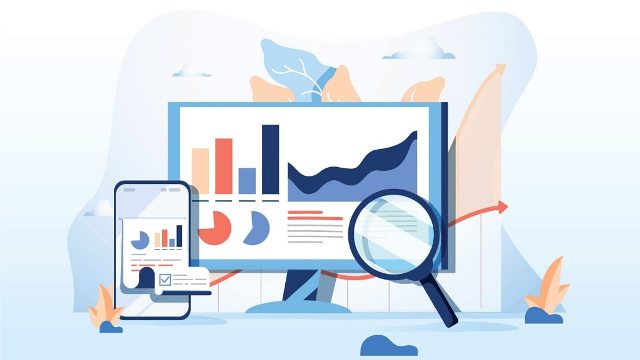
SEM campaigns generate a wide range of performance data, including:
- Impressions
- Clicks
- Click-through rate (CTR)
- Cost per click (CPC)
- Conversions
- Conversion rate
- Cost per acquisition (CPA)
- Conversion value
- Return on ad spend (ROAS)
This data helps marketers identify what is working and what needs improvement.
Advantages of Search Engine Marketing
Immediate Online Visibility
One of the biggest advantages of SEM is that it can provide businesses with visibility much faster than many organic marketing methods. A new business may take time to build organic search authority. With a properly configured paid search campaign, relevant advertisements can potentially start appearing soon after the campaign becomes eligible to serve. This makes SEM particularly useful for product launches, promotions, seasonal campaigns, and new services.
Reaches High-Intent Customers
Search marketing has a major advantage: people are actively searching. Someone searching for “buy office furniture online” is likely to have a stronger commercial intent than someone who simply sees an advertisement while browsing unrelated content. By targeting relevant search queries, businesses can connect with potential customers closer to the decision-making stage.
Generates Targeted Traffic
SEM allows businesses to target specific keywords, locations, audiences, devices, and other campaign parameters. As a result, companies can focus their advertising budget on people who are more likely to be interested in their products or services.
Provides Measurable Results
Traditional advertising can sometimes make it difficult to determine exactly how many people responded to an advertisement. SEM provides detailed performance data that helps marketers understand campaign effectiveness. For example, if a campaign generates 2,000 clicks and 100 conversions, the advertiser can analyze the campaign to understand the relationship between advertising costs, traffic, and results.
Flexible Budget Management
SEM can accommodate different budgets. A startup may begin with a small campaign, while an established company may manage campaigns across multiple locations and product categories. Budgets can be adjusted as campaign performance changes.
Helps Generate Leads
Lead generation is one of the most common SEM objectives. A service-based company can direct searchers to a landing page containing:
- A clear service description
- Benefits
- Customer testimonials
- Trust signals
- A contact form
- A phone number
- A strong call-to-action
This can turn search traffic into qualified inquiries.
Supports E-Commerce Sales
SEM is particularly powerful for online retailers because advertisements can connect users directly with products. For example, someone searching for “wireless headphones under ₹5,000” can be shown relevant products, making the journey from search to purchase much shorter.
Supports Local Businesses
Local businesses can use SEM to target customers within their service areas. A local electrician, lawyer, dentist, salon, or home repair company can create campaigns around location-specific searches. This helps reduce wasted advertising spend and focus on potential customers who can actually use the service.
Enables Remarketing
Not everyone converts on their first visit. SEM and related paid advertising strategies can help businesses reconnect with previous visitors or audiences based on eligible signals. Remarketing can be useful for businesses with longer buying journeys, such as education providers, travel companies, real estate businesses, and high-value service providers.
Provides Useful Customer Insights
Search campaigns can reveal valuable information about what customers are searching for. Advertisers can discover:
- Popular search terms
- Product demand
- Customer questions
- Geographic demand
- Seasonal trends
- High-performing services
- Common purchasing patterns
These insights can also influence SEO, content marketing, landing pages, and overall business strategy.
Supports Marketing Experiments
SEM makes it relatively easy to test different approaches. Businesses can experiment with:
- Headlines
- Descriptions
- Offers
- Landing pages
- Keywords
- Calls-to-action
- Audience segments
- Bidding strategies
The results can then be evaluated using campaign data.
Complements SEO
SEM and SEO are not necessarily competing strategies. SEO focuses primarily on improving organic visibility, while SEM can provide paid visibility. Using both can help a business increase its overall presence on search engine results pages. For example, a company may rank organically for “digital marketing services” while also running paid search campaigns for high-value commercial keywords.
Real-World Examples of Search Engine Marketing
Example 1: Dental Clinic
A dental clinic wants more appointment bookings. It creates search campaigns targeting keywords such as:
- “dentist near me”
- “best dentist in Ahmedabad”
- “teeth cleaning clinic”
- “dental implant consultation”
The advertisements direct users to dedicated service pages where visitors can book appointments or request a consultation.
Potential result: More qualified website visitors and appointment inquiries.
Example 2: E-Commerce Store
An online electronics store wants to increase sales of smartphones and accessories. The company can use Shopping campaigns and search advertising to promote products when people search for specific devices or accessories.
For example:
“Buy wireless earbuds online”
Relevant products can appear with product information and pricing.
Potential result: Increased product visibility, website traffic, and online purchases.
Example 3: Solar Company
A solar installation company wants to generate residential leads. It targets searches such as:
- “solar panels for home”
- “solar installation company”
- “rooftop solar installers”
- “solar panel price”
The advertisements lead visitors to landing pages explaining installation options, benefits, pricing considerations, and financing.
Potential result: More quote requests and sales opportunities.
Example 4: Travel Agency
A travel agency wants to promote holiday packages. It can create campaigns targeting terms such as:
- “Dubai holiday packages”
- “best Europe tour packages”
- “family holiday packages”
- “international tour packages”
Users who click the ads can be directed to relevant package pages.
Potential result: More inquiries and bookings.
Example 5: B2B Software Company
A SaaS company wants to attract businesses looking for project management software. It could target searches such as:
- “project management software”
- “team collaboration software”
- “business task management tool”
The company can send visitors to a landing page offering a free trial or product demonstration.
Potential result: More free trials, demo requests, and qualified leads.
SEM vs SEO: What’s the Difference?
SEM and SEO both aim to improve a business’s presence in search engines, but they work differently.
Factor | SEM | SEO |
Primary approach | Paid search visibility | Organic search visibility |
Speed | Can generate visibility quickly | Usually takes longer |
Cost model | Generally pay for clicks or other interactions | No direct payment to search engines for organic clicks |
Keyword targeting | Highly controllable | Based on relevance and organic ranking |
Long-term value | Requires ongoing advertising investment | Can provide lasting organic visibility |
Testing | Fast campaign testing | Usually slower to test |
Best suited for | Immediate traffic, leads, sales, promotions | Sustainable organic growth and authority |
The best strategy depends on the business. In many cases, combining SEO and SEM creates a stronger overall search marketing strategy.
How to Create an Effective SEM Strategy
A successful SEM campaign requires more than simply selecting keywords and increasing the budget.
Step 1: Define Your Goal
Start by deciding what you want the campaign to achieve. Your goal could be:
- Generate leads
- Increase sales
- Get phone calls
- Drive website traffic
- Promote a product
- Generate bookings
- Increase app installs
A clear goal makes campaign optimization easier.
Step 2: Research Keywords
Identify keywords that your potential customers actually use. Focus on relevance and search intent rather than choosing keywords simply because they have high search volume.
Step 3: Organize Campaigns Properly
Group related keywords and advertisements into logical campaigns and ad groups. A well-organized account makes it easier to manage budgets, messaging, and performance.
Step 4: Write Relevant Advertisements
Your advertisements should clearly communicate what you offer and why users should choose your business. Use compelling but accurate messaging and include a clear call-to-action.
Step 5: Build Strong Landing Pages
Sending every visitor to the homepage is not always the best approach. Create landing pages that closely match the advertisement and search intent. A strong landing page should be:
- Relevant
- Mobile-friendly
- Fast-loading
- Easy to navigate
- Trustworthy
- Focused on one primary goal
Step 6: Set Up Conversion Tracking
Track meaningful actions such as purchases, calls, forms, bookings, and qualified leads. This allows you to optimize campaigns based on business outcomes rather than clicks alone.
Step 7: Monitor Performance
Review campaign metrics regularly. Look beyond impressions and clicks. Pay attention to conversions, conversion value, CPA, ROAS, and the quality of leads generated.
Step 8: Optimize Continuously
SEM is not a “set it and forget it” marketing channel. Regular optimization can include:
- Adding negative keywords
- Improving advertisements
- Adjusting bids
- Refining locations
- Testing landing pages
- Reviewing search terms
- Improving conversion tracking
- Shifting budget toward better-performing campaigns
Common SEM Mistakes to Avoid
Even well-funded campaigns can perform poorly when the fundamentals are overlooked.
Targeting Too Broadly
Broad targeting without proper controls can attract irrelevant traffic and waste budget.
Ignoring Search Intent
A keyword may have high search volume but still produce poor business results if it does not match the company’s offering.
Sending Traffic to Poor Landing Pages
A great advertisement cannot compensate for a confusing, slow, or irrelevant landing page.
Focusing Only on Clicks
Clicks are useful, but they are not the final business objective. A campaign with fewer clicks but more qualified leads may be much more valuable than a campaign generating large amounts of inexpensive traffic.
Not Tracking Conversions
Without reliable conversion tracking, it becomes difficult to know which campaigns and keywords are actually producing results.
Failing to Review Search Terms
Search-term analysis can reveal irrelevant queries that should be excluded and valuable queries that deserve additional attention.
Ignoring Mobile Users
A significant amount of search activity happens on mobile devices. Landing pages and conversion processes should therefore provide a smooth mobile experience.
How to Measure SEM Success
The right metrics depend on the campaign objective.
Click-Through Rate (CTR)
CTR measures how often users click an advertisement after seeing it. A stronger CTR can indicate that the advertisement is relevant and appealing to the audience.
Cost Per Click (CPC)
CPC shows how much you pay, on average, for each click.
Conversion Rate
Conversion rate measures the percentage of users who complete a desired action after interacting with your campaign.
Cost Per Acquisition (CPA)
CPA helps determine how much it costs to acquire a conversion or customer, depending on how the conversion is defined.
Return on Ad Spend (ROAS)
ROAS compares the revenue attributed to advertising with the amount spent on advertising. For e-commerce businesses, ROAS can be an especially important performance indicator.
Conversion Value
Conversion value helps businesses understand the monetary value generated by their campaigns.
Impression Share
Impression share can provide insight into how frequently your advertisements are appearing compared with the available opportunities within the relevant market.
Future of Search Engine Marketing
Search behaviour continues to evolve as users increasingly interact with AI-powered search experiences, voice interfaces, visual search, and conversational tools. This does not mean traditional search advertising is becoming irrelevant. Instead, marketers need to think more carefully about search intent, relevance, user experience, first-party data, conversion quality, and the relationship between paid and organic search visibility.
Businesses should also ensure that their websites provide useful, trustworthy, and easy-to-understand information. Strong landing pages, accurate business information, compelling offers, and reliable measurement will remain important regardless of how search interfaces change.
Best Practices for Successful SEM Campaigns
For better results, businesses should follow a structured approach:
- Set clear and measurable campaign goals.
- Research keywords based on customer intent.
- Use relevant and specific ad groups.
- Write advertisements that closely match search intent.
- Create dedicated, conversion-focused landing pages.
- Use geographic targeting where appropriate.
- Monitor search terms regularly.
- Add negative keywords to reduce irrelevant traffic.
- Track meaningful conversions.
- Test different advertisements and landing pages.
- Optimize campaigns based on business results.
- Review CPA, conversion rate, conversion value, and ROAS.
- Adjust budgets according to performance.
- Combine SEM with SEO and other digital marketing channels.
Conclusion
Search Engine Marketing offers businesses a practical way to connect with potential customers when they are actively searching for products, services, or solutions. Its ability to provide targeted visibility, flexible budget control, measurable performance, and fast opportunities for traffic and conversions makes it an important part of modern digital marketing.
From a local dental clinic and solar company to an e-commerce store or B2B software provider, almost any business can use SEM when the campaign strategy matches its goals and audience.
The key is to look beyond simply getting clicks. Successful SEM focuses on reaching the right audience, understanding search intent, delivering relevant advertisements, providing a strong landing-page experience, and measuring meaningful business outcomes.
When managed strategically, SEM can become more than a source of website traffic. It can become a reliable channel for generating qualified leads, increasing sales, understanding customer behaviour, and supporting long-term business growth.
Frequently Asked Questions About Search Engine Marketing
What are the main advantages of search engine marketing?
The major advantages include quick visibility, targeted traffic, high-intent audience reach, flexible budgeting, measurable performance, lead generation, e-commerce sales support, and detailed campaign insights.
What is the difference between SEM and SEO?
SEM generally focuses on paid search advertising, while SEO focuses on improving a website’s organic visibility in search engine results. Businesses can use both strategies together to strengthen their overall search presence.
Is SEM suitable for small businesses?
Yes. Small businesses can use SEM with carefully controlled budgets and location or keyword targeting. Starting with a focused set of high-intent keywords can help reduce unnecessary spending.
How much does search engine marketing cost?
There is no fixed SEM cost. Advertising expenses depend on factors such as keywords, competition, location, industry, audience, campaign objectives, and bidding strategy. Businesses can generally control their advertising budget according to their goals.
Does SEM help increase sales?
Yes. SEM can contribute to sales by placing relevant products or services in front of users who are actively searching for them. However, results also depend on factors such as offer quality, pricing, landing-page experience, conversion tracking, and campaign optimization.
What are the most important SEM metrics?
Important metrics include CTR, CPC, conversion rate, CPA, conversion value, ROAS, impressions, clicks, and impression share. The most important metrics depend on the campaign’s specific business objective.
Can SEM and SEO be used together?
Absolutely. SEO can support long-term organic visibility, while SEM can provide targeted paid visibility. Using both can help businesses reach customers at different stages of the search journey.
How long does it take to see results from SEM?
SEM can begin generating impressions and clicks relatively quickly once campaigns are approved and eligible to serve. However, meaningful performance optimization usually requires ongoing testing, conversion data, and campaign refinement.