seolounge
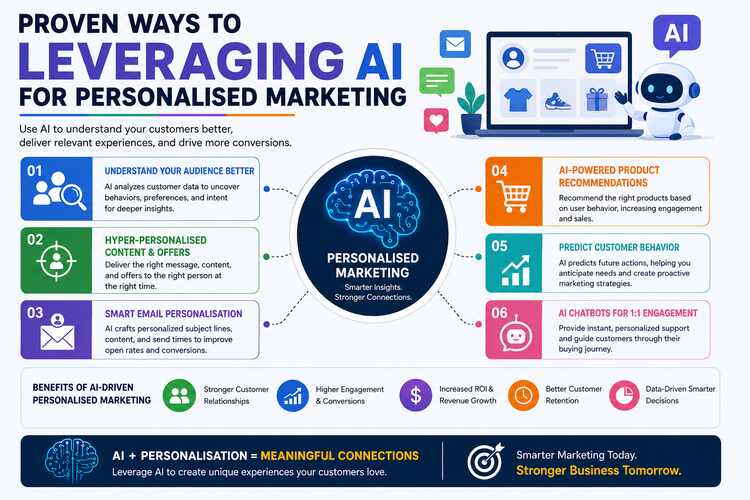
Today, your audience expects more than generic ads and broad email blasts. They want brands to understand what matters to them and respond in ways that feel useful. That is why artificial intelligence has become such a powerful force in marketing personalization. It helps you analyze customer signals, adapt content in real time, and create stronger customer engagement without overloading your team. When used well, AI makes personalization more precise, more scalable, and more relevant to everyday marketing efforts.
Understanding AI in Personalized Marketing
Artificial intelligence is changing how personalized marketing works. Instead of relying on broad assumptions, you can use AI to analyse customer behaviour, identify patterns, and refine marketing strategies with greater accuracy. This gives your business a better way to connect content, offers, and timing to real customer needs.
For marketing teams, that means a smoother path to a better customer experience. AI helps process large streams of information quickly, so messages can adjust as people browse, click, or buy. The result is more responsive communication and a more practical way to scale personalized marketing.
What Is Personalized Marketing Powered by AI?
Personalized marketing powered by artificial intelligence means tailoring content, offers, and timing to each person based on what the data shows. Instead of sending the same message to everyone, you use AI personalization to match marketing efforts to customer behaviour, interests, and previous actions.
In practice, businesses use AI to deliver personalized marketing messages by analyzing browsing activity, purchase history, and user interactions as they happen. That allows systems to suggest products, adjust website content, or trigger email campaigns that feel more relevant to the individual in front of you.
What makes personalization marketing so useful is scale. Traditional methods took too much manual work. AI helps you respond faster and with more consistency, so each customer gets communication that feels personal without forcing marketing teams to build every variation by hand.
How AI Is Transforming Traditional Marketing Approaches
Traditional marketing campaigns often relied on broad audience groups and fixed messaging. You launched the campaign, waited for results, and hoped the right person noticed. AI technology changes that by helping brands react to signals in real time rather than sticking to static plans.
Now, marketing personalization can shift as customer engagement changes. If someone browses a product, reads specific content, or interacts on a channel, AI can help shape the next message or offer based on that action. This makes the experience more timely and much more useful.
That shift points to the future of marketing. Instead of one-size-fits-all outreach, brands can build campaigns that learn, adapt, and improve continuously. You are no longer guessing what may work. You are using live patterns to shape smarter communication.
What types of data does AI use for personalization?
AI depends on multiple forms of customer data to make personalization useful. The strongest results usually come from combining historical data with current activity, so systems can understand both long-term preferences and immediate intent. That creates a fuller picture of what a person may need next.
Common data sources include:
- Demographic data such as age, location, or industry
- Behavioral data from browsing, clicks, and site activity
- Historical data from purchase history and earlier interactions
- Social media activity that reveals interests and engagement patterns
- Email marketing response data such as open rates and clicks
The AI technologies most effective for personalized marketing campaigns often work because they connect these inputs. Machine learning, predictive analytics, and recommendation engines use this data mix to spot patterns, group customers, and support more relevant decisions across channels.
Core Benefits of Leveraging AI for Personalization
Artificial intelligence gives your personalization strategies more speed and precision. It helps you move from broad messaging to relevant content that reflects customer behavior, which can improve customer engagement across many touchpoints. That matters when people expect fast, useful interactions from every brand they trust.
At the same time, better timing and stronger relevance can lift customer satisfaction and strengthen the overall customer experience. AI also reduces manual effort, giving teams more room to improve campaigns. The next sections break down the biggest business and customer-facing gains.
Enhancing Customer Engagement and Satisfaction
One of the clearest benefits of AI in personalized marketing strategies is stronger customer engagement. When people see relevant content tied to their interests, they are more likely to click, browse, and respond. That makes every touchpoint feel more useful and less like background noise.
Just as important, AI helps you send the right message at the right time. It can react to customer needs as they develop, whether that means recommending content after a visit or surfacing a product after a recent search. These small improvements build momentum over time.
Customer satisfaction rises when experiences feel easier and more personal. Instead of asking your audience to sort through generic offers, you help them find what matters faster. That reduces friction, strengthens trust, and gives your brand a more thoughtful presence in everyday interactions.
Increasing Marketing Efficiency and ROI
AI can improve marketing efficiency by taking over time-heavy tasks like sorting audiences, recommending content, and guiding message timing. That means marketing teams spend less effort on repetitive work and more time improving strategy, creative direction, and campaign quality.
Another advantage is faster data analysis. AI reviews performance metrics, customer behavior, and engagement patterns quickly, so teams can react sooner. Instead of waiting for a full post-campaign review, you can refine content and delivery while campaigns are still active.
This supports better marketing ROI. When content is more relevant and resources are used more carefully, you often see stronger engagement and better conversion rates. Add continuous optimization to that process, and your campaigns become more responsive, efficient, and easier to improve over time.
Key Highlights
- Artificial intelligence helps brands turn customer data into marketing personalization that feels timely and useful.
- AI improves customer engagement by delivering the right message through email campaigns, social media, and other channels.
- Machine learning and predictive analytics support product recommendations, dynamic content, and stronger conversion rates.
- Better data quality, clear goals, and the right technology are essential for successful ai personalization.
- Marketing teams can scale personalization efforts with automation while still protecting creativity and customer experience.
- Testing, feedback loops, and continuous optimization help brands improve measurable impact over time.
How does AI personalization impact the customer experience?
AI personalization improves customer experience by making each interaction feel more aligned with what a person wants right now. It helps brands respond to browsing habits, past purchases, and current actions, so content feels timely instead of random. That creates smoother journeys across channels.
Your personalization efforts also become more consistent. AI can support product suggestions, content changes, and messaging choices without forcing customers to repeat themselves at every touchpoint. When communication feels connected, people are more likely to stay engaged and keep moving forward.
There is also a human side to this. While AI does not replace emotional intelligence, it gives teams better insight into what customers respond to. When used thoughtfully, that can strengthen customer loyalty by making interactions feel attentive, respectful, and easier to navigate.
What challenges are associated with AI personalization?
AI personalization brings clear value, but it also comes with practical challenges. If your data is incomplete or disorganized, the output will suffer. Strong results depend on data quality, reliable systems, and clear processes for measuring what is actually working. Key challenges include:
- Data protection requirements and trust concerns around customer information
- Data quality issues that weaken recommendations and targeting
- Ethical considerations tied to transparency and responsible use
- Weak performance metrics that make improvement difficult to track
There is also an operational challenge. AI can reduce repetitive tasks, but only when teams have the right setup. Without clean inputs, feedback loops, and clear ownership, automation creates confusion rather than progress. That is why strategy and governance matter as much as the tools.
Creating an AI Personalization Strategy
Strong personalization strategies start with a simple idea: know what your customer data can support before you ask AI to act on it. If your information is fragmented or unreliable, even the best tools will struggle. Good planning keeps your marketing strategies grounded in what customers actually need.
You also need a practical framework for moving from insight to action. That means improving data quality, choosing tools that fit your workflow, and testing carefully. The three phases below show how to build a strategy that supports customer needs and sustainable growth.
Phase 1: Data Readiness
Data readiness is the first step in any AI initiative. Before you automate personalization, you need to know whether your customer data is complete, structured, and usable. AI can process vast amounts of data, but it cannot fix weak foundations on its own.
Start by reviewing where data lives and how it connects. Brands often need to audit CRM systems, customer data platforms, and other sources to spot missing interactions or inconsistent records. That work supports better data analysis and helps teams build a more complete customer view.
This phase also addresses one of the biggest implementation challenges: data quality. If the information is outdated or fragmented, personalization will miss the mark. Clean, unified inputs make predictions more reliable and give your business a stronger base for the next stages.
Phase 2: Tool Selection
Once your data is ready, the next step is choosing the right technology. The best AI technology is not the flashiest option. It is the one that fits your systems, supports your goals, and can grow with your needs over time.
For many marketing teams, useful tools include customer data platforms, recommendation engines, marketing automation systems, and AI-powered asset management solutions. These tools help connect insights to execution, whether you are serving product suggestions, adjusting content, or coordinating campaigns across channels.
When deciding which AI tools are recommended for personalized marketing campaigns, focus on integration, scalability, and flexibility. If a platform cannot work with your current environment or adapt as customer expectations change, it will slow you down instead of helping you personalize more effectively.
Phase 3: Deployment & Testing
Deployment should be steady and measurable. Once your system is live, the goal is not just to launch campaigns. It is to learn what actually improves customer response. That is why strong performance metrics and clear testing plans matter from day one.
Best practices during this phase include:
- Use b testing to compare messages, offers, and content variations
- Track measurable impact through engagement and conversion data
- Build feedback loops so new results improve future decisions
- Review performance metrics often instead of waiting until the end
Continuous optimization is what turns AI from a tool into an advantage. You test, learn, and adjust based on real behavior. That process helps marketers improve relevance, reduce wasted effort, and keep personalization aligned with changing audience expectations.
Key AI Technologies Powering Personalised Marketing
Several forms of artificial intelligence work together to support better personalization. The most important ones help you understand patterns, predict likely actions, and interpret language from customer interactions. This gives marketers a stronger foundation for timely, relevant decisions.
Machine learning, predictive analytics, and natural language processing are central to modern AI technology. They turn raw signals into useful action across content, product suggestions, and campaign delivery. The following sections explain how these technologies shape personalized marketing in practical ways.
Machine Learning and Predictive Analytics
Machine learning and predictive analytics are among the most effective technologies for personalized marketing campaigns. They help brands study customer data, detect patterns, and estimate what a person may do next. That makes personalization faster, sharper, and more consistent across touchpoints.
The use of ai here is practical. Machine learning improves as it processes more interactions, while predictive analytics helps teams anticipate likely interests, responses, or purchases. Recommendation engines rely on this combination to surface useful products, content, or offers in real time.
| Technology | How it supports personalization |
| Machine learning | Finds patterns in customer data and improves targeting over time |
| Predictive analytics | Estimates likely behaviour, purchase intent, and next-best actions |
| Recommendation engines | Uses patterns and predictions to suggest relevant products or content |
Together, these tools help you move from guesswork to evidence-based decisions.
Natural Language Processing for Customer Insights
Natural language processing helps brands understand the words people use across digital channels. That includes comments, messages, search terms, and conversations that reveal customer behaviour more clearly than raw numbers alone. It gives teams another layer of context for smarter decisions.
For example, natural language processing can help identify themes in social media activity or customer responses. This supports stronger customer insights by showing what people care about, what they react to, and how their preferences shift over time. Those signals can shape better personalization choices.
It also supports content creation. When marketers understand the language customers use, they can build messaging that feels more natural and relevant. That does not replace strategy or creative judgment, but it does help teams align tone, topics, and offers with what audiences actually want.
Real-World Examples of AI in Marketing Personalization
AI technology is already shaping everyday personalization marketing in visible ways. You can see it in product suggestions, changing website content, and messaging that responds to user actions. These examples show how brands turn signals into practical experiences that better match customer needs.
For marketers, these use cases matter because they connect strategy to execution. They show how content personalization supports broader marketing strategies without making the process harder to manage. The next two sections cover two common and effective applications.
AI-Driven Product Recommendations
One of the clearest examples of AI in marketing personalization is product recommendations. Recommendation engines analyze customer purchase history, browsing patterns, and recent actions to surface items that match individual preferences. This helps brands make suggestions that feel useful instead of random.
The biggest advantage is timing. Because AI can process signals in real time, recommendations can update as customers interact with a site or app. Someone who views a category, revisits a product, or completes a purchase can immediately see related options tailored to that journey.
These systems support both engagement and revenue. Better product recommendations can encourage cross-sells, upsells, and deeper browsing, all while improving the customer experience. For many brands, this is one of the most direct ways AI turns data into measurable business value.
Dynamic Content Creation and Personalization
AI also helps with dynamic content that changes based on user interactions. Instead of showing the same page, message, or offer to every visitor, brands can adjust content to reflect current interests, earlier engagement, or likely intent. That makes experiences feel more responsive.
This has clear value for content creation. AI can help identify which headlines, visuals, or messages perform best, then guide teams toward stronger content personalization choices. It does not replace creative work, but it can make that work more focused and easier to scale.
Most importantly, customers receive more relevant content. When each touchpoint reflects what they have already shown interest in, the journey feels smoother and more useful. That can improve engagement, reduce friction, and make your brand easier to respond to.
Scaling Personalized Marketing with AI
Scaling personalization marketing used to be difficult because teams had to manage too many variations by hand. AI personalization changes that by helping brands respond to vast amounts of data without slowing down campaign execution. It gives marketers a practical way to personalize at volume.
For marketing teams, that means better coordination across audiences, channels, and marketing campaigns. You can adapt messages more quickly, support more customer groups, and keep experiences consistent. The next sections explain the mechanics behind that scale.
Decoding Personalized Marketing
At its core, ai personalization means adapting messages and experiences to fit specific customer groups instead of treating everyone the same. Strong personalization strategies consider behavior, preferences, and context so each interaction feels more relevant and less generic.
This matters for customer experience because expectations differ across audiences. To tailor AI-driven personalized marketing for different cultures, brands need to use customer signals carefully and shape content to fit audience context, not just demographic labels. Relevance depends on understanding what matters to each group.
Marketing teams benefit because AI helps manage that complexity at scale. It can spot patterns across segments, suggest the best next step, and support adjustments across channels. That makes it easier to serve different audiences while keeping strategy coordinated and execution efficient.
Automated Customer Segmentation at Scale
AI technology helps scale personalization by improving customer segmentation. Instead of relying only on demographic data, it can group people based on customer behavior, purchase signals, and real-time interactions. That leads to segments that are more accurate and far more useful.
With automated customer segmentation, marketing campaigns can reflect how people actually engage with your brand. First-time visitors, returning shoppers, and loyal buyers can all receive different content or offers based on what their actions suggest, not just who they appear to be on paper.
This is one of the main ways AI supports large-scale personalization. It reduces manual sorting, updates segments as behavior changes, and gives teams a sharper understanding of audience movement. As a result, you can run smarter campaigns across a broader customer base.
Delivering Targeted Messaging Across Multiple Channels
Businesses use AI to deliver personalized marketing messages by coordinating targeted messaging across channels. That includes social media, email campaigns, paid promotions, and in-app experiences. AI helps decide which message should appear, where it should appear, and when it has the best chance to matter.
This improves your ability to reach the right person at the right time. If a customer has shown interest in a category, clicked a previous email, or interacted with content on another channel, AI can use those signals to guide the next communication.
The results can show up quickly in performance metrics like open rates, clicks, and engagement. More important, the experience feels connected. Instead of separate channel efforts competing for attention, your brand starts to feel consistent, timely, and easier for customers to follow.
AI-Driven Customer Segmentation
AI-driven customer segmentation refines how brands organize audiences. By studying customer data from behavior, purchases, and interactions, ai technology creates customer groups that reflect current patterns instead of outdated assumptions. This makes segmentation a living process rather than a one-time exercise.
That matters because marketing efforts improve when segments are built around meaningful signals. A customer browsing often but not buying may need different messaging from someone with strong repeat purchase behavior. AI helps identify those differences faster and with more precision.
At scale, this gives your team a better operating model. Segments update as new data arrives, campaigns can adjust more quickly, and resources go toward the audiences most likely to respond. It is a practical way to personalize broadly without losing accuracy.
Strategic Benefits of AI Personalization
AI personalization does more than improve single campaigns. It strengthens marketing strategies by helping brands react faster, serve more relevant experiences, and learn from each interaction. Over time, those gains add up in ways that affect both revenue and long-term customer relationships.
This creates a real competitive advantage. Brands that use AI well are better positioned to improve conversion rates, encourage repeat engagement, and build customer loyalty through more useful communication. The next two sections focus on these strategic outcomes.
Increased Conversion Rates
One of the main benefits of leveraging AI in personalized marketing strategies is higher conversion rates. When your content, offers, and timing reflect customer behavior, people are more likely to act. That makes marketing personalization more effective than broad, generic outreach.
AI improves this by analyzing signals across the journey and helping brands respond with better next steps. If a visitor shows interest, revisits a product, or engages with a message, AI can guide the follow-up. That creates a clearer path from attention to action.
The impact is measurable. Better conversion rates support stronger marketing ROI and help teams prove the value of personalization. Instead of relying on vague assumptions, you can connect relevance to outcomes and show how smarter targeting improves business results over time.
Higher Customer Lifetime Value
AI can also increase customer lifetime value by improving the full relationship, not just the first sale. When personalization marketing reflects what customers care about, they are more likely to stay engaged, return, and keep buying over time. That supports stronger customer retention.
A better customer experience plays a central role here. Helpful recommendations, smoother journeys, and relevant communication reduce friction and make the brand easier to trust. Small improvements at each touchpoint can compound into more repeat activity and stronger long-term value.
Customer satisfaction matters as well. When people feel understood, they are less likely to disengage and more likely to keep the relationship going. That is why AI-driven personalization can support both near-term performance and healthier customer value over the long run.
Best Practices for Implementing AI in Personalized Marketing
Strong ai personalization depends on process as much as technology. The best practices are usually simple: collect better data, align tools to goals, and measure results often. This gives marketing teams a clearer path to better personalization marketing without adding unnecessary complexity.
It also helps protect quality in content creation and campaign execution. When your foundation is clear, AI becomes a support system rather than a distraction. The following sections focus on practical habits that improve performance and keep personalization useful.
Aligning Data Collection with Personalization Goals
A key best practice is aligning data collection with personalization goals. Do not gather information just because you can. Focus on customer data that helps improve relevance, timing, and message quality in real marketing campaigns. Purposeful collection creates better results.
This also improves data quality. When teams know what they need and why they need it, they are more likely to maintain clean records and reduce gaps across systems. That gives AI a stronger foundation for predictions, recommendations, and content decisions.
If your goal is to improve offers, segment audiences, or personalize messaging, make sure the data supports those aims directly. That connection keeps your strategy practical and helps teams avoid cluttered systems that slow progress or weaken campaign performance.
Balancing Creativity with AI Automation
Many teams worry that ai automation will limit creativity. In reality, AI can enhance content creation by handling routine work, organizing assets, and highlighting what performs best. That gives creative professionals more room to focus on ideas, storytelling, and brand voice.
AI also supports dynamic content by helping teams find the right assets and message variations for different audiences. Instead of spending hours searching or repeating setup tasks, marketers can move faster and put more energy into shaping campaigns that feel distinctive.
The human role still matters most. Emotional intelligence, judgment, and creative direction are what make personalized content feel authentic. AI helps by reducing friction and offering insight, but the final experience is strongest when automation and creativity work together instead of competing.
Improved Marketing ROI
Improved marketing ROI comes from discipline, not just deployment. One best practice is to connect personalization efforts to clear goals and track how they affect engagement, conversion rates, and revenue. That creates a more reliable view of what AI is contributing.
Regular data analysis is essential. AI can uncover patterns quickly, but teams still need to review results, compare approaches, and refine tactics based on what is actually happening. Without that step, campaigns may run efficiently but fail to improve in meaningful ways.
Continuous optimization is where the value compounds. As you learn which messages, offers, and channels perform best, you can improve future decisions and produce more measurable impact. Over time, that cycle helps AI become a stronger driver of efficiency and business growth.
Enhanced Customer Satisfaction
Enhanced customer satisfaction starts with relevance. When content personalization reflects what your audience needs, people spend less time filtering out noise and more time engaging with something useful. That leads to a smoother customer experience and fewer frustrating interactions.
Another best practice is consistency. AI should help you deliver the right message across touchpoints, not create disconnected moments. When channels align, customers feel like the brand understands them rather than reacting randomly to isolated events or single clicks.
The best results come from ongoing review. If you study responses and keep improving, personalization becomes more helpful over time. That strengthens trust, improves satisfaction, and gives customers more reason to continue engaging with your brand in the future.
Competitive Differentiation
AI can become a real competitive advantage when it is tied to customer needs rather than novelty. The goal is not to use ai technology for its own sake. It is to improve personalization marketing in ways that make the brand more relevant and easier to choose.
That requires strong marketing strategies. Brands need clear objectives, useful data, and a process for turning insight into action. When those elements are in place, AI helps teams respond faster, personalize better, and improve experiences without increasing manual effort.
Differentiation grows from consistency. If your brand regularly delivers timely content, better recommendations, and smoother journeys, customers notice. Over time, those improvements separate you from competitors still relying on generic messaging and slower, less adaptive campaign models.
Building a Strong Foundation for Personalized Marketing Strategies
Effective personalization strategies depend on what happens before launch. If your customer data is scattered, your assets are hard to manage, or your workflows are slow, ai technology will have limited impact. A strong foundation helps every later decision work better.
That foundation also supports stronger content personalization and customer engagement. When systems, assets, and processes are connected, teams can respond faster and with more confidence. The next three sections focus on the building blocks that make that possible.
Start with a Clear Data Strategy
A clear data strategy is the starting point for effective personalization. Before rolling out AI, you need to understand what customer data you have, where it sits, and whether it is usable. This creates the structure needed for stronger data readiness and better decisions.
Good planning includes reviewing CRM systems and other platforms to see whether they capture relevant interactions. It also means identifying gaps where signals are being lost. Those steps make data analysis more reliable and give teams a better view across touchpoints.
AI can process vast amounts of data, but volume alone is not enough. If the data is fragmented or inconsistent, personalization will fall short. A focused data strategy helps you unify information, improve quality, and create the conditions for stronger AI performance.
Leverage AI-Driven DAM for Smarter Content Personalization
AI-driven DAM can remove a major barrier in marketing personalization: managing content at scale. When assets are hard to find or reuse, teams waste time and struggle to personalize efficiently. A smarter system helps organize and surface the right material faster.
This supports content personalization by tagging assets with metadata, making them easier to retrieve for specific audience needs. It also improves content creation workflows by reducing bottlenecks and helping teams repurpose existing material without losing consistency or speed.
As ai technology becomes more central to marketing operations, AI-driven DAM gives brands a practical advantage. It helps teams deliver tailored content more quickly, maintain brand standards, and support personalization without creating more manual complexity behind the scenes.
Bridging the Gap Between Creativity and AI-Powered Content Personalization
AI technology can strengthen creativity by removing friction from content creation. It helps marketing teams find the right assets, identify useful variations, and understand which messages are performing best. That frees people to spend more time shaping ideas that connect.
This matters in content personalization because scale often puts pressure on quality. AI can recommend strong options and keep brand guidelines visible, but it does not replace creative direction. Instead, it supports better decisions and faster execution across many audience needs.
The balance is what makes the approach work. When marketing teams combine AI insight with human creativity, campaigns become both efficient and more emotionally aware. That is how brands keep personalization useful, distinctive, and grounded in real customer connection.
Conclusion
In conclusion, leveraging AI in personalized marketing offers businesses a remarkable opportunity to enhance customer experiences and drive engagement. By harnessing the power of data, machine learning, and predictive analytics, companies can create tailored content and targeted messaging that resonates with their audience. The strategic implementation of AI not only boosts efficiency and ROI but also fosters lasting customer relationships and increases conversion rates. As you embark on your journey to integrate AI into your marketing strategies, remember that it’s essential to balance creativity with automation. If you’re ready to elevate your marketing game, consider booking a free consultation to explore how AI can transform your approach and achieve your business goals.
Frequently Asked Questions
What challenges do marketers face when using AI for personalization?
Marketers often face challenges with ai personalization when data quality is poor, systems are disconnected, or goals are unclear. Data protection and ethical considerations also matter, especially when using customer information at scale. Marketing teams need clean data, clear rules, and strong measurement to make personalization effective.
How can AI-driven marketing strategies be adapted for different audiences?
AI-driven marketing strategies can be adapted by using behaviour, preferences, and context to shape messages for different customer groups. Strong ai personalization focuses on customer needs rather than broad assumptions. The future of ai personalization depends on making experiences more relevant for distinct audiences without losing consistency.
Which AI tools are recommended for personalized marketing campaigns?
Useful ai technology for personalized marketing campaigns includes customer data platforms, recommendation engines, marketing automation tools, and AI-powered DAM systems. The right technology should integrate with existing tools, support scale, and help teams act on customer insights quickly and consistently across channels.