seolounge
“You don’t have to invest funds for SEO tools. There are loads of Free SEO Tools for online marketers which may assist you.” This was the information which Nathan Finch of all Aussie Hosting supplied in a current manual to SEO for startups, however, it applies to more than simply startups. It is possible to do a huge amount of SEO perform in almost virtually any site without spending a dime onto premium SEO tools.
SEO is no longer about guesswork, it’s about making informed decisions with the right data. Whether you’re managing a small business website, running an eCommerce store, or working for a digital marketing agency, SEO tools help you understand how your website performs and where you can improve. From keyword research and competitor analysis to technical audits and backlink tracking, these tools simplify complex tasks and save valuable time.
Modern SEO platforms also help marketers monitor search rankings, identify content opportunities, optimize on-page elements, and uncover technical issues that may be affecting website performance. Many tools now include AI-powered recommendations, making it easier to create optimized content that aligns with user intent and search engine expectations.
Some of the most popular SEO tools include Google Search Console, Google Analytics 4, Ahrefs, SEMrush, Moz, Screaming Frog, Surfer SEO, and PageSpeed Insights. Each tool serves a different purpose, so the best approach is to combine a few that fit your goals and budget. Free tools are excellent for getting started, while premium platforms provide deeper insights for businesses looking to scale their SEO efforts.
The key is not to use every SEO tool available but to use the right ones consistently. By analyzing data regularly and acting on the insights, online marketers can improve rankings, increase organic traffic, and create a stronger digital presence that delivers long-term results.
What Are Free SEO Tools?
SEO tools have become an essential part of digital marketing. They help you understand how your website is performing, identify areas that need improvement, and make data-driven decisions that can boost your search engine rankings. Whether you want to analyze your site’s speed, find valuable backlink opportunities, research keywords, or monitor your competitors, the right SEO tools can simplify these tasks and save you hours of manual work.
For bloggers, business owners, marketers, and SEO professionals alike, these tools provide valuable insights into your website’s overall health. They help uncover technical issues, optimize content, track keyword rankings, and reveal opportunities to attract more organic traffic. Instead of relying on guesswork, you can make informed decisions backed by real data.
The good news is that you don’t need a large budget to get started. Many powerful SEO tools are available for free and offer features that are more than enough for small businesses, startups, and beginners. Tools like Google Search Console, Google Analytics, and PageSpeed Insights provide valuable information without costing a penny.
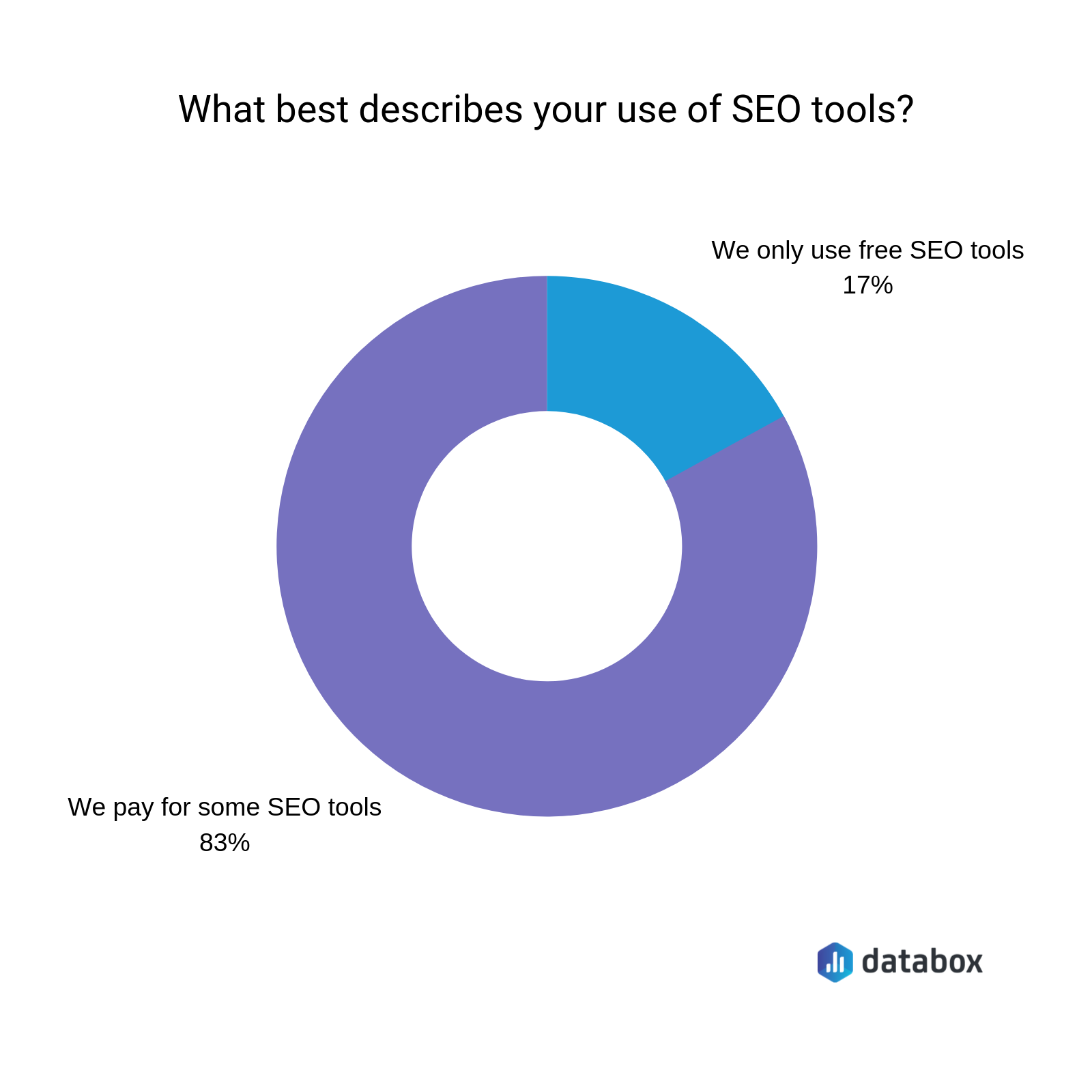
In fact, free SEO tools are more popular than many people realize. According to an industry survey of 187 SEO professionals, 17% reported that they rely exclusively on free SEO tools for their day-to-day optimization tasks. This shows that with the right combination of free resources, it’s possible to build an effective SEO strategy without investing in expensive software.
So, what are the best free SEO tools?
To discover the best free SEO tools, we asked 187 SEO professionals to weigh in with their favorites and supporting SEO Tools. Here are the tools they recommended, so you are use it hassle-free.
42 Best Free SEO Tools for Every Digital Markters
Beneath, we’ll go through each of the 42 SEO Tools our respondents recommended. But if you’re merely looking for a shortlist of tools to consider, all of Google’s free tools were truly recommended, as well as Yoast SEO, Ahrefs’ Backlink Checker, and Ubersuggest:
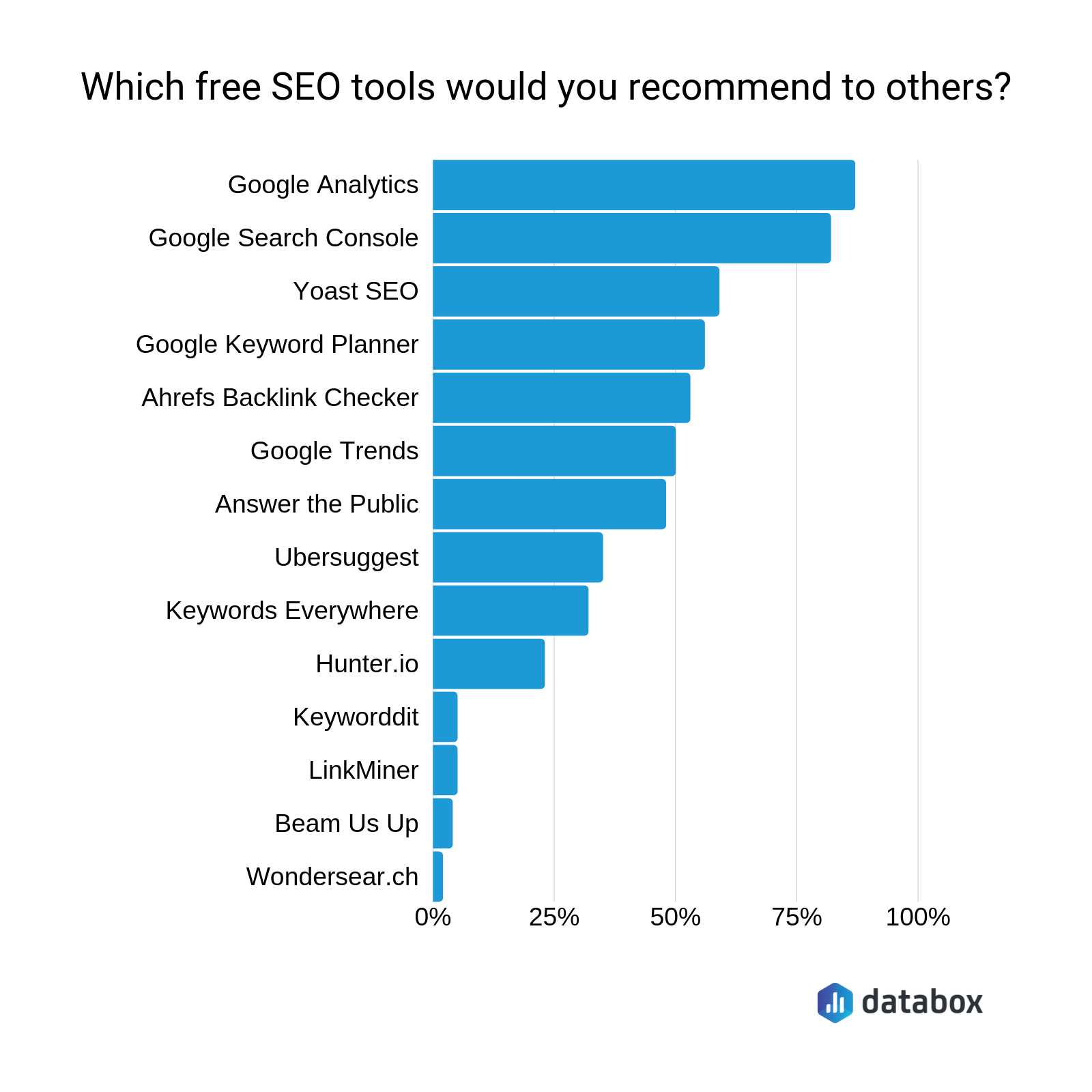
Editor’s note: Since this survey was conducted, Keywords Everywhere transitioned from a free to a paid tool, so while it’s still affordable, we exclude it from the list as it’s no longer free.
Along those lines, we’ve only included tools that are 100% free below. Some of those free plans are limited—for example, you only get 10 searches per month in Moz Keyword Explorer using the free account,but you can access those free searches on an ongoing basis without ever paying a dime.
Tools with free trials only were excluded from the list.
Best Free SEO Tools for Smarter Digital Marketing
The right SEO tools can make a huge difference in how you plan, execute, and improve your digital marketing strategy. Whether you’re researching keywords, auditing your website, tracking rankings, analyzing backlinks, or monitoring competitors, SEO tools provide the insights you need to make informed decisions and achieve better search visibility.
The good news is that you don’t need an expensive subscription to start optimizing your website. There are many excellent free SEO tools that offer powerful features for beginners, bloggers, small businesses, and even experienced marketers. While some tools have usage limits on their free plans, they still provide enough functionality to help you improve your website’s performance without any upfront investment.
Free SEO tools can help you:
- Discover high-potential keywords for your content.
- Monitor your website’s search performance.
- Identify technical SEO issues that affect rankings.
- Analyze backlinks and competitor strategies.
- Improve page speed and user experience.
- Optimize on-page SEO elements like titles, meta descriptions, and headings.
- Track website traffic and user behavior.
Popular free SEO tools include Google Search Console, Google Analytics 4, Google Keyword Planner, Google Trends, Bing Webmaster Tools, Screaming Frog SEO Spider (Free Version), Ahrefs Backlink Checker, AnswerThePublic, Ubersuggest, SEO Minion, MozBar, Rank Math, Yoast SEO, PageSpeed Insights, Lighthouse, and many more.
Instead of trying to use every available tool, choose a combination that aligns with your goals. For example, Google Search Console is ideal for monitoring search performance, Google Analytics helps you understand visitor behavior, Screaming Frog identifies technical SEO issues, and Ubersuggest or Google Keyword Planner can support your keyword research.
The best SEO strategy isn’t about having the most tools—it’s about using the right tools consistently. By reviewing your website’s data regularly and acting on the insights, you can improve your rankings, attract more qualified traffic, and build a stronger online presence without spending a fortune on software.
Here are the best, 100% free SEO tools, each recommended by professional SEOs, all listed in alphabetical order.
- Ahrefs Backlink Checker
- Animalz Revive
- AnswerThePublic
- Bing Webmaster Tools
- Check My Links
- Checkbot
- Chrome DevTools
- Dofollow Link Checker
- Google Analytics
- Google Keyword Planner
- Google My Business
- Google Search
- Google Search Console
- Google Tag Manager
- Google Trends
- HARO
- Hunter
- INK
- Lighthouse
- Moz Keyword Explorer (Free Community Account)
- MozBar
- Rank Console
- Rank Math
- Screaming Frog
- SEO Minion
- SEO Review Tools
- SEOPress
- SEOquake
- SERP2CSV
- Serpstat
- SimilarWeb
- Siteliner
- SmallSEOTools Domain Authority Checker
- Soovle
- Thruuu
- Ubersuggest
- UENI
- Valentin.app
- Varvy SEO Tool
- Voila Norbert
- WebSite Auditor
- Yoast SEO
Best Free SEO Tools to try and Get Good Results
- Ahrefs Backlink Checker
Ahrefs Backlink Checker is one of the best free tools for analyzing a website’s backlink profile. It allows you to view the top backlinks pointing to any domain or webpage, along with important SEO metrics such as Domain Rating (DR), referring domains, anchor text distribution, and the pages that attract the most links.
This tool is especially useful for competitor research. By studying where your competitors earn backlinks, you can discover new link-building opportunities and identify content that performs well within your industry. If you’re looking to strengthen your website’s authority without investing in expensive software, Ahrefs Backlink Checker is an excellent place to start.
- Animalz Revive
Publishing content is only half the job, keeping it updated is just as important. Animalz Revive helps you identify older blog posts that have started losing traffic or rankings, making it easier to prioritize which pages need refreshing.
Instead of guessing what to update, the tool highlights content that could benefit from new information, better optimization, or improved formatting. Regularly updating existing content can increase search visibility, improve user experience, and help maintain strong rankings over time.
- AnswerThePublic
AnswerThePublic is a powerful keyword research tool that uncovers the questions, phrases, and topics people are searching for online. Rather than focusing only on individual keywords, it helps you understand the real questions your audience wants answered.
This makes it an excellent resource for creating blog posts, FAQs, guides, and long-form content that aligns with user intent. Whether you’re targeting voice search or looking for fresh content ideas, AnswerThePublic provides valuable insights that help you create content your audience is actively searching for.
- Bing Webmaster Tools
Although Google often gets the spotlight, Bing Webmaster Tools is another valuable platform that many marketers overlook. It helps website owners monitor their site’s performance, submit sitemaps, identify indexing issues, and improve technical SEO.
The platform also includes SEO reports, keyword insights, and diagnostic tools that can uncover website errors affecting your rankings. Using Bing Webmaster Tools alongside Google Search Console gives you a broader understanding of your website’s overall search performance.
- Check My Links
Check My Links is a simple Chrome extension designed to quickly scan web pages for broken or invalid links. Instead of manually checking every hyperlink, the tool instantly highlights links that are no longer working.
This is particularly useful for website maintenance and link-building campaigns. Finding broken links on relevant websites can also create opportunities to suggest your own content as a replacement, making it an effective outreach strategy while improving the user experience of your own website.
- Checkbot
Checkbot is a free website auditing tool that helps identify common technical SEO and website performance issues. It scans your site for problems such as broken links, duplicate content, missing page titles, redirect issues, and URL structure errors.
Beyond SEO, Checkbot also evaluates website speed and provides practical recommendations to improve loading performance. Faster websites typically offer a better user experience and are more likely to perform well in search engine results.
- Chrome DevTools
Chrome DevTools is much more than a developer resource—it’s also an incredibly useful SEO tool. Built directly into the Chrome browser, it allows you to inspect web pages, analyze page speed, test mobile responsiveness, and troubleshoot technical issues.
SEO professionals often use DevTools to identify rendering problems, examine page elements, monitor Core Web Vitals, and evaluate how websites perform across different devices. Since it’s completely free and built into Chrome, it’s one of the most accessible technical SEO tools available.
- Dofollow Link Checker
When building backlinks, knowing whether a link is “dofollow” or “nofollow” is essential. Dofollow Link Checker removes the need to inspect a page’s source code manually by instantly identifying the link type.
This saves valuable time during guest posting, outreach campaigns, and competitor backlink analysis. By focusing your efforts on websites that provide dofollow links, you can develop a stronger backlink profile that supports long-term SEO growth.
- Google Analytics
Google Analytics is one of the most important tools for understanding how visitors interact with your website. It provides detailed insights into traffic sources, user behavior, conversions, engagement, and customer journeys.
With Google Analytics, you can identify your highest-performing pages, understand where visitors come from, measure campaign performance, and discover areas where users leave your website. These insights help you make smarter content and marketing decisions while continuously improving your website’s performance.
- Google Keyword Planner
Google Keyword Planner remains one of the most trusted tools for keyword research. It helps marketers discover relevant keywords, estimate search demand, and identify new opportunities to target valuable search terms.
The tool provides keyword ideas, search volume estimates, competition levels, and related search phrases directly from Google’s own data. Whether you’re planning SEO content or running Google Ads campaigns, Keyword Planner helps you understand how your audience searches online and choose keywords that can drive qualified traffic to your website.
- Google Business Profile
If your business serves customers in a specific location, Google Business Profile is one of the most valuable free SEO tools available. It helps your business appear in Google Search and Google Maps, making it easier for local customers to discover your products or services.
You can add important business information such as your address, phone number, website, business hours, photos, and customer reviews. A well-optimized profile improves local visibility, builds trust with potential customers, and increases the chances of attracting more calls, website visits, and in-store traffic.
- Google Search
Sometimes, the best SEO research tool is the search engine itself. Google Search provides valuable insights into what people are actively searching for and how Google presents information for different queries.
Features like Autocomplete, “People Also Ask,” and Related Searches can help you uncover long-tail keywords, content ideas, and search intent. You can also use advanced search operators to analyze competitors, find indexing opportunities, and perform quick SEO research without relying on paid tools.
- Google Search Console
Google Search Console is a must-have tool for anyone serious about improving their website’s SEO. It gives you direct insights into how Google crawls, indexes, and ranks your website while highlighting technical issues that may affect your search performance.
You can monitor keyword rankings, impressions, clicks, click-through rates (CTR), indexing status, mobile usability, Core Web Vitals, and backlink data. It also allows you to submit XML sitemaps, request page indexing, and identify pages that need optimization. By regularly reviewing Search Console data, you can make informed decisions that improve your website’s visibility in search results.
- Google Tag Manager
Google Tag Manager simplifies the process of managing tracking codes on your website without requiring constant code changes. Instead of editing your website every time you need a new tracking script, you can add, update, and manage tags from a single dashboard.
It supports tracking events such as button clicks, form submissions, video views, file downloads, and scroll depth. This makes it easier to measure user interactions, improve marketing campaigns, and collect accurate data for Google Analytics and other platforms.
- Google Trends
Google Trends helps you understand what people are searching for and how search interest changes over time. Whether you’re planning seasonal campaigns or looking for trending topics, this free tool provides valuable insights into search behavior.
You can compare keywords, analyze regional interest, identify emerging trends, and discover popular topics before they become highly competitive. Content marketers and SEO professionals often use Google Trends to create timely content that matches current user demand.
- HARO (Help a Reporter Out)
HARO connects journalists with industry experts who can provide insights for news stories and articles. By responding to relevant media requests, you have the opportunity to earn high-quality backlinks from trusted websites and well-known publications.
Besides improving your backlink profile, HARO helps establish your brand as an authority in your industry. A single successful response can generate valuable media coverage, increase brand awareness, and strengthen your website’s credibility.
- Hunter
Hunter is a popular outreach tool that helps you find professional email addresses associated with websites and businesses. It’s especially useful for SEO professionals, bloggers, and digital marketers involved in link-building and guest posting campaigns.
Instead of spending time searching manually, Hunter helps you quickly identify the right contacts for outreach. Personalized communication with the correct decision-makers increases your chances of building relationships, earning backlinks, and securing collaboration opportunities.
- INK
INK is an AI-powered writing assistant designed to help you create content that performs well in search engines while remaining easy for readers to understand. It analyzes your content for SEO optimization, readability, grammar, and structure.
The platform offers real-time suggestions that help improve keyword usage, sentence clarity, and overall content quality. Whether you’re writing blog posts, landing pages, or product descriptions, INK helps create content that balances user experience with SEO best practices.
- Lighthouse
Lighthouse is Google’s free website auditing tool that evaluates important aspects of your website, including performance, accessibility, SEO, and overall user experience. Built into the Chrome browser, it generates detailed reports with practical recommendations for improvement.
The tool highlights issues affecting page speed, mobile usability, image optimization, and technical performance. By following its recommendations, you can improve Core Web Vitals, deliver a better user experience, and enhance your website’s search engine performance.
- Moz Keyword Explorer
Moz Keyword Explorer is an excellent keyword research tool that helps marketers discover valuable keyword opportunities and evaluate their ranking potential. Even the free version provides useful insights into search volume, keyword difficulty, and related keyword suggestions.
Beyond keyword research, Moz helps you understand your competitors’ strategies and identify gaps in your own content. By targeting keywords with the right balance of search volume and competition, you can build a stronger SEO strategy and increase your chances of ranking higher in search results.
- MozBar
MozBar is a free browser extension that gives you instant SEO insights while browsing the web. With just one click, you can view important metrics like Domain Authority (DA), Page Authority (PA), link attributes, and on-page SEO elements without leaving your browser.
It is especially useful for competitor research, backlink analysis, and evaluating the strength of websites before reaching out for guest posting or link-building opportunities. MozBar helps marketers make informed SEO decisions quickly, making it a valuable addition to any SEO toolkit.
- Rank Console
Rank Console is a simple yet effective keyword rank tracking tool that helps you monitor your website’s search engine positions over time. Instead of manually checking rankings every day, you can easily see which keywords are improving, declining, or remaining stable.
Tracking keyword performance allows you to measure the effectiveness of your SEO efforts and identify pages that need additional optimization. It’s a great free option for anyone who wants to keep a close eye on their organic search visibility.
- Rank Math
Rank Math is one of the most popular free SEO plugins for WordPress. It simplifies on-page SEO by guiding you through content optimization with easy-to-follow recommendations.
The plugin helps you optimize title tags, meta descriptions, focus keywords, schema markup, XML sitemaps, image SEO, and internal linking. Its user-friendly interface makes it suitable for beginners, while its advanced features provide enough flexibility for experienced SEO professionals.
- Screaming Frog SEO Spider
Screaming Frog SEO Spider is one of the most trusted technical SEO tools available. It crawls your website just like a search engine and identifies technical issues that could impact your rankings.
The free version allows you to scan up to 500 URLs, making it ideal for small and medium-sized websites. It helps detect broken links, duplicate content, missing meta descriptions, redirect chains, orphan pages, missing image alt text, and many other technical SEO problems. Regular site audits with Screaming Frog can significantly improve your website’s health and search performance.
- SEO Minion
SEO Minion is a lightweight browser extension that provides quick access to essential on-page SEO information. It helps you analyze page titles, meta descriptions, headings, canonical tags, image alt text, and internal links without needing multiple tools.
The extension also includes useful features for checking broken links, previewing SERP snippets, and analyzing hreflang tags. It’s perfect for marketers who need fast SEO insights while reviewing websites or optimizing content.
- SEO Review Tools
SEO Review Tools offers a collection of free utilities that help improve both on-page and technical SEO. From content analysis and keyword optimization to backlink checking and duplicate content detection, the platform provides a wide range of helpful resources.
Its content analysis tool is particularly useful for ensuring that your pages are properly optimized with the right headings, keyword placement, meta descriptions, and readability. Whether you’re auditing a single page or reviewing an entire website, SEO Review Tools can help uncover valuable optimization opportunities.
- SEOPress
SEOPress is a feature-rich WordPress SEO plugin designed to help website owners optimize their content without unnecessary complexity. It offers many advanced SEO features in its free version, making it an excellent alternative to other popular SEO plugins.
With SEOPress, you can manage meta titles and descriptions, generate XML and HTML sitemaps, implement schema markup, optimize social media sharing, and improve technical SEO. The plugin is lightweight, regularly updated, and suitable for both beginners and experienced WordPress users.
- SEOquake
SEOquake is a free browser extension that provides detailed SEO metrics for any webpage you visit. Instead of switching between multiple tools, you can instantly access information such as keyword density, indexed pages, backlinks, page health, and metadata.
The extension is especially useful for competitor analysis, SERP evaluation, and quick website audits. Its comprehensive data helps marketers understand how competing websites are optimized and identify opportunities to improve their own SEO strategy.
- SERP2CSV
SERP2CSV is a practical tool for SEO professionals who regularly analyze search engine results pages. It allows you to export Google search results into a CSV file, making it much easier to perform large-scale competitor analysis.
Once exported, the data can be combined with other SEO platforms for deeper analysis of rankings, backlinks, and keyword opportunities. This automation saves significant time compared to manually collecting search results and is especially valuable for agencies managing multiple SEO campaigns.
- Serpstat
Serpstat is an all-in-one SEO platform that offers a generous free plan for marketers looking to improve their search performance. It combines keyword research, competitor analysis, backlink monitoring, rank tracking, and website auditing into a single platform.
One of its biggest strengths is competitor research. By entering your own website or a competitor’s domain, you can discover top-performing keywords, identify content gaps, and uncover new ranking opportunities. Whether you’re building an SEO strategy from scratch or refining an existing campaign, Serpstat provides valuable insights to support long-term organic growth.
- SimilarWeb
SimilarWeb is a powerful website intelligence tool that helps you understand how websites attract and engage visitors. It provides valuable insights into traffic sources, audience demographics, user behavior, and top-performing channels.
You can use SimilarWeb to analyze competitor websites, discover where their traffic comes from, and identify new opportunities for your own marketing strategy. Whether you’re planning SEO, content marketing, or paid campaigns, this tool helps you make more informed decisions based on real-world data.
- Siteliner
Siteliner is an excellent tool for identifying on-site SEO issues that could impact your search rankings. It scans your website for duplicate content, broken links, redirects, and other technical problems that may affect both user experience and search engine performance.
The tool generates easy-to-understand reports, allowing you to quickly locate and fix issues before they become larger SEO problems. Regular site audits with Siteliner help keep your website healthy, organized, and search-engine friendly.
- SmallSEOTools Domain Authority Checker
Understanding your website’s authority is important when planning an SEO strategy, and SmallSEOTools Domain Authority Checker makes this process simple. It lets you check the Domain Authority (DA) of your own website or any competitor’s domain within seconds.
This information helps you evaluate potential backlink opportunities, compare your website against competitors, and measure your site’s overall authority. It’s a quick and convenient tool for anyone involved in link building or competitive SEO research.
- Soovle
Soovle is a keyword research tool that gathers search suggestions from multiple platforms, including Google, YouTube, Bing, Yahoo, Amazon, and Wikipedia. Instead of relying on a single search engine, it helps you explore how users search across different platforms.
This makes it an excellent resource for discovering long-tail keywords, generating fresh content ideas, and understanding user intent. If you’re creating content for multiple channels, Soovle can uncover valuable keyword opportunities you might otherwise miss.
- Thruuu
Thruuu is designed to simplify search engine results page (SERP) analysis. It examines the top-ranking pages for your target keyword and highlights important SEO elements such as headings, content structure, word count, metadata, and frequently covered topics.
By studying what already ranks well, you can better understand search intent and create more comprehensive, high-quality content that has a stronger chance of outperforming your competitors.
- Ubersuggest
Ubersuggest has become one of the most popular free SEO platforms because it combines multiple SEO features into a simple, beginner-friendly interface. It offers keyword research, domain analysis, backlink tracking, competitor insights, content ideas, and site audit reports in one place.
Whether you’re launching a new website or improving an existing one, Ubersuggest helps you discover valuable keywords, identify SEO opportunities, and monitor your website’s growth. Its easy-to-use dashboard makes it a great choice for marketers, bloggers, and small business owners.
- UENI
UENI is a helpful platform for small businesses that need a professional website without spending weeks creating one. It automatically generates a search-engine-friendly website complete with business information, images, and optimized content.
This makes it an excellent solution for startups, local businesses, and entrepreneurs who want to establish an online presence quickly while following basic SEO best practices from the beginning.
- Valentin.app
If you’re targeting customers in different cities or countries, Valentin.app can be extremely useful. The tool lets you view Google search results as they appear in specific geographic locations without physically being there.
This helps SEO professionals and businesses perform accurate local SEO research, monitor regional keyword rankings, and understand how search results differ based on user location. It’s particularly valuable for agencies managing international or multi-location SEO campaigns.
- Varvy SEO Tool
Varvy SEO Tool provides a detailed analysis of your website based on Google’s recommended SEO guidelines. It evaluates important technical factors such as mobile usability, HTTPS implementation, page speed, structured data, robots.txt, image optimization, and more.
One of its biggest strengths is that it doesn’t just identify issues—it also explains why they matter and offers practical recommendations to fix them. Its simple interface makes technical SEO easier to understand, even for beginners.
- Voila Norbert
Successful link building often starts with finding the right contact person, and Voila Norbert makes that process much easier. This email lookup tool helps you find verified email addresses for website owners, editors, journalists, and business professionals.
By simplifying outreach, Voila Norbert allows marketers to build stronger relationships, improve guest posting success, and increase the chances of earning high-quality backlinks from authoritative websites.
- WebSite Auditor
WebSite Auditor is a comprehensive website auditing tool that helps you identify on-page SEO issues and improve your website’s overall optimization. It scans your pages for missing metadata, duplicate content, broken links, keyword optimization opportunities, and technical SEO errors.
The tool also provides content optimization suggestions by comparing your pages with top-ranking competitors, helping you create more relevant and competitive content that aligns with search engine expectations.
- Yoast SEO
Yoast SEO is one of the most trusted and widely used WordPress SEO plugins. It makes on-page optimization simple by providing real-time recommendations while you create content.
The plugin helps optimize titles, meta descriptions, keyword usage, readability, internal linking, XML sitemaps, schema markup, and social media previews. Its traffic light scoring system makes it easy for beginners to understand what needs improvement before publishing a page or blog post.
For WordPress users, Yoast SEO remains an essential tool for building search-friendly websites, improving content quality, and following SEO best practices with confidence.