seolounge
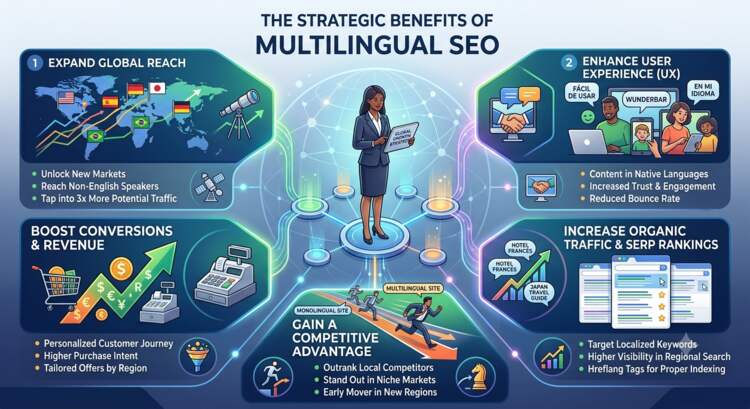
Multilingual SEO helps your website appear in search results when people search in more than one language. For global brands, that can make the difference between being seen and being missed. It also supports a better experience because people prefer to browse in their native language. While international SEO often focuses on countries, multilingual SEO focuses on language visibility. If your business wants to grow beyond one market, this is no longer optional. It is a practical way to reach more people.
Understanding Multilingual SEO
At its core, multilingual SEO is about helping your website rank for more than one language. It connects your content with the target audience based on how people use Google Search and other platforms in their own language.
That makes it closely related to international SEO, but not identical. Search behavior changes by market, and your SEO strategies need to reflect that. Before you translate anything, you need to understand who you want to reach, what they search for, and how language shapes visibility.
Definition of Multilingual SEO and Its Importance
Multilingual SEO is the process of optimizing your website so it can improve visibility in search engines in more than one language. It includes translated pages, localized metadata, language-specific keyword targeting, and links built in the target language.
Why does that matter? Because your target audience does not always search in English. Many users begin with their own language first, and that shapes which search results they see. If your site is not prepared for different languages, those users may never find you.
For global brands, the most important best practices are clear: create quality translations, optimize metadata, research local keywords, use hreflang tags, and avoid technical confusion between language versions. These steps help search engines understand your content and help people reach the right page faster.
How Multilingual SEO Differs from Traditional SEO
Traditional SEO usually focuses on a single language and a single site experience. You build pages, target keywords, and shape content around one audience’s search intent. The structure is often simpler because there are fewer moving parts.
Multilingual SEO adds complexity. You are working with translated content, different versions of the same page, and a target language that may have very different search patterns. A phrase that performs well in English may not reflect local search intent in another market.
There is also more technical work. You need to separate language versions clearly, manage duplicate content risk, and help search engines serve the correct page. In short, multilingual SEO is not just traditional SEO repeated in another language. It requires different planning, content decisions, and site signals.
Why Every Industry Needs a Multilingual SEO Strategy
A multilingual SEO strategy matters in every industry because customers do not all search, browse, or buy in English. If your target market includes people in various languages, your website should meet them where they are. That applies to software, retail, services, and publishing alike.
Growth often comes from new markets, not just existing ones. When you optimize for additional languages, you improve your chance of appearing in local search environments, including localized Google versions and country-specific search platforms.
SEO experts often stress growth through visibility, and this is a direct route to it. Global brands use multilingual SEO to reach more people and improve conversions through local language support. If users cannot discover your pages in their own language, expansion becomes harder than it needs to be.
How Does Multilingual SEO Differ from Regular SEO Practices?
Regular SEO often assumes one language, one content set, and one main audience. You optimize a single site for stronger search visibility, usually within a more familiar market. In that setup, keyword targeting, metadata, and page structure stay relatively straightforward. Multilingual content changes that. You now have to think about language-specific pages, regional expectations, and how search engines interpret multiple versions of similar content.
The biggest difference is that you cannot rely on literal translations and expect the same results. Search habits vary across different countries, and the same product may be described in entirely different ways. Your SEO strategies must account for that, along with technical signals such as hreflang, language-based URLs, and internal linking between versions. So while the goals are similar, the execution is far more layered.
Planning Out Your Multilingual SEO Strategy
Before you publish anything, build a multilingual SEO strategy that matches your goals. That means choosing local markets, defining the target language for each audience, and deciding how content creation will work across your site.
A solid content strategy also keeps content localization from becoming rushed or inconsistent. When you plan first, you make better choices about keywords, structure, and measurement. The next sections break that planning into practical parts you can actually use.
Optimizing Content for SERPs and AIOs
To rank in multilingual search results, your pages need more than translation. They need structure, relevance, and language-specific targeting. That starts with keyword research based on how people actually use Google Search in their native language.
A useful approach is to localize content around real terms, not copied English phrases. Your SEO strategies should reflect what users ask, how they compare options, and which words they trust. This helps multilingual content align with both ranking signals and reader expectations.
You should also make each page easy to understand at a glance. Localized titles, descriptions, and clear page wording improve discoverability and make your content easier for users to choose. If the page feels written for the reader instead of converted for them, performance usually improves.
Content Localization
Content localization means adapting website content so it feels natural in a different language, not just understandable. That includes wording, formatting, and context. People want to read in their native language, but they also want the message to feel familiar.
Cultural differences matter here. Dates, currencies, measurements, idioms, and examples may need to change even when the core meaning stays the same. A page translated from U.S. English into Italian, for example, may require changes well beyond the text itself.
A simple tip is to review every user-facing element, not only your main copy. Error messages, forms, and checkout steps all shape the experience. Strong content localization improves trust, supports rankings, and reduces the friction that often appears when website content feels imported instead of local.
Choosing Your Target Markets
Choosing target markets starts with evidence, not guesswork. Look at where your current visitors come from and identify countries already showing interest. If people from different countries are finding your site, those regions may offer your best first opportunities.
Next, consider whether the target audience in those places searches in the same language or needs a separate version. Search behavior can vary widely, even when users seem to want the same thing. That is why market selection should be tied to language demand and user habits.
If you are entering new markets, start with the ones that show clear signs of traction. Existing traffic patterns can help you prioritize. A focused rollout is usually easier to manage than trying to launch every language at once.
Setting Up Analytics
You cannot judge multilingual SEO success without analytics. Start by segmenting traffic by language version or URL pattern so you can see how each part of your website content performs. That makes it easier to compare growth between languages.
This matters because search results may improve in one language while staying flat in another. With clear segmentation, you can identify which pages attract visits, which versions convert, and where visibility is rising. That gives your strategy direction instead of assumptions.
The compiled guidance highlights Matomo for this work, especially for URL-based segmentation and keyword reporting. While many teams also know Google Analytics, the key point is measurement by language. If you cannot separate performance clearly, you cannot improve it with confidence.
Enjoy a Quick Setup with Weglot
Translation tools can speed up the early stages of building a multilingual website, especially when you need to launch more than one language version efficiently. Weglot is often mentioned as a practical option for getting content into a different language quickly.
That said, speed should not replace quality. Your website content still needs review, localization, and proper SEO handling. A tool can help with implementation, but rankings depend on how useful and accurate the final pages are for real users.
For monitoring, the compiled information strongly points to Matomo for analytics and multilingual SEO tracking. So if you are asking which tools help, the practical answer is this: use translation tools such as Weglot to assist setup, then use dedicated analytics to measure what each language version actually achieves.
Key Highlights
- Multilingual SEO helps you improve visibility in search engines across different languages and reach a wider audience.
- Strong keyword research matters because direct translation rarely matches how people actually search in local markets.
- Content localization improves user experience by adapting website content to native language needs and cultural differences.
- Technical setup matters too, especially hreflang tags, URL structure, and duplicate content control.
- Clear language switching, fast pages, and mobile usability support better international performance.
- Analytics helps you track multilingual SEO success, compare language versions, and refine strategy over time.
How to implement an effective multilingual SEO strategy
An effective multilingual SEO strategy starts with research, then moves into structure, content, and tracking. You need SEO strategies that reflect real search behavior, not assumptions copied from one market to another.
Best practices include multilingual keyword research, careful translation of the website’s content, and technical signals that help Google Search understand each version. The next steps focus on market selection, audience insight, and competitive review so you can build on solid ground.
Step 1: Identify your target markets
Your first move is to identify the right target market before investing in translation or optimization. Start with what you already know. Existing visitors can reveal which languages and regions are already interested in your business.
Analytics can help you spot a promising target country by showing where current traffic comes from. If one region is consistently visiting your site, that may be a better opportunity than launching blindly into several new markets at once.
This step matters for global brands and smaller businesses alike. A clear target audience makes later choices easier, from keyword research to URL structure. When you know where growth is most likely, your multilingual SEO effort becomes more focused and more efficient.
Target audience analysis
Once you pick a market, study the target audience in that region. What language do they prefer online? Do they use the same terms as your current audience? These questions matter because search behavior often changes across local markets.
User intent is just as important. A translated keyword may look correct but still miss what people actually want. In different countries, users may search with different product names, levels of urgency, or expectations about what a page should provide.
The best way to respond is to build pages around local usage, not around your internal wording. Multilingual SEO works best when content reflects how people think and search in each market. That is how you create pages that feel relevant instead of imported.
Competitor research
Competitor research helps you understand what already works in different markets. Look at the sites that rank well in your target language and examine the terms they use, the pages they create, and the kind of links they earn.
This is useful because search behavior differs by region. Local competitors often reveal how users describe products and what type of content gets attention. Even global brands need this step because a strong English strategy does not automatically transfer abroad.
The compiled information also recommends mining competitor backlinks in your target market. That can uncover relevant websites that may link to your translated pages too. Done well, competitor research gives you faster insight and reduces trial and error.
Building a Solid Multilingual SEO Foundation
A strong multilingual SEO foundation begins with clear technical organization. Search engines and users both need to understand which language version they are viewing and how it connects to the rest of your site.
That is where URL structure, internal links, and decisions around separate domains become important. If your setup is messy, later optimization gets harder. The following sections cover audience targeting, language choices, and site structure so you can build the right base.
Identifying Target Audiences and Markets
Not every audience should be treated the same, even if they speak a similar language. Identifying target audiences within target markets helps you decide where to invest first and what kind of experience each group needs.
For global brands, this means looking beyond broad expansion goals. Which markets already show demand? Which ones need stronger local language support to improve user experience? Those answers shape smarter rollout decisions.
A practical foundation comes from prioritization. Rather than launching every language at once, choose the audiences with the clearest business case or existing traffic. That lets you refine your process, improve quality, and build a better multilingual framework before expanding further.
Choosing the Right Languages for Expansion
Choosing a target language should be based on audience demand, not just brand ambition. If your visitors already come from specific regions, that gives you a practical clue about which language version to launch first.
A new language creates work across content, metadata, structure, and support pages. So the best choice is the one most likely to improve visibility and customer experience. In many cases, language demand appears before full market expansion does.
This is one reason multilingual SEO supports global business growth. Global brands grow faster when they remove language barriers for high-interest audiences. Instead of forcing users into one version of the site, you make the path easier, clearer, and more likely to convert.
Structuring URLs for Multilingual Websites (ccTLD, subdomains, subdirectories)
Your URL structure affects both usability and maintenance. For a multilingual website, the common options are separate domains, subdomains, and subdirectories. Each one can work, but the right choice depends on how much complexity you can manage.
Separate domains offer clearer targeting, but they also create more work. Subdomains keep language versions distinct while staying under one main brand. Subdirectories are often easier to manage, though they can create longer URLs. Once you choose, keep that structure consistent and monitor performance in tools such as Google Search Console.
| Option | Example | Main Advantage | Main Limitation |
| Separate domains | yoursite.fr | Strong country or language separation | Highest management effort |
| Subdomains | fr.yoursite.com | Clear divide between versions | More setup than subdirectories |
| Subdirectories | yoursite.com/fr | Easier to manage in one site | URLs can become longer |
Keyword Research Across Multiple Languages
Keyword research changes when you work across languages. You cannot assume English keywords will perform the same way in a different language, even if the translation seems accurate.
Multilingual keyword research should focus on local wording and search intent. That means using translated terms only as a starting point, then validating what people actually search. The next sections explain the tools, regional intent signals, and keyword balance that make this work.
Tools and Techniques for Language-Specific Keyword Research
A simple multilingual keyword research workflow starts with your core English terms. From there, use translation tools such as Google Translate to create initial versions in the target language. This gives you a starting list, not a final strategy.
Next, validate those phrases in keyword research platforms. The compiled guidance specifically points to tools such as Ahrefs and Semrush, and teams may also use Google Keyword Planner for additional search data. The goal is to find what local users actually type, not what looks correct on paper.
One important point: do not reject terms just because volume looks small. Search activity is often lower outside broad English markets, and many valuable keywords are low-volume anyway. Relevance and intent matter more than chasing only large numbers.
Assessing Search Intent in Different Regions
Search intent can shift from one location to another, even when the language appears similar. That is why you need to assess how your target audience uses terms in different regions before finalizing content.
Start by reviewing actual Google Search results in the region you want to reach. Look at the ranking pages, their wording, and the type of information they emphasize. Those results often reveal whether user intent is informational, commercial, or navigational.
This matters because the right translation may still be the wrong keyword. If your page answers a different need than the one users have, rankings and engagement will both suffer. Matching regional user intent gives your multilingual pages a far better chance to perform well.
Balancing Global, National, and Local Keywords
A strong keyword strategy does not rely on one level of targeting. You may need global keywords for broad product terms, national keywords for country-level visibility, and more specific phrasing for local markets.
Search engines respond best when the wording matches what users in that area expect. Broad terms can help you reach larger audiences, but local phrasing often improves relevance and conversions. The right mix depends on how your audience searches and how your site is structured.
The key is balance. Use wider terms where they reflect real demand, but do not let them drown out local opportunities. In multilingual SEO, smaller search results can still produce meaningful traffic when the page feels highly relevant to the market.
Creating and Optimizing Multilingual Content
Creating multilingual content means going beyond fast translated content. Your pages need to sound natural, reflect local expectations, and support the same quality across every language version.
That is why content creation should involve professional linguists or a native speaker, especially for important pages. Literal translations often miss the mark. In the next sections, you will see how translation, localization, and on-page adaptation work together for stronger results across web pages and even social media messaging.
Translation vs. Localization: What’s Best for SEO?
Translation changes words from one language into another. Localization goes further by adapting content language to local expectations, habits, and context. For SEO, that difference matters more than many teams realize.
Literal translations often sound correct but fail in search or conversion. They may miss local phrasing, cultural references, or practical details such as currency and date formats. That weakens both visibility and trust.
Localization is usually the better choice for SEO because it aligns with how people read and search. Professional linguists and a native speaker can help shape pages that feel natural, useful, and regionally appropriate. If you want rankings and a stronger user response, localized content is the safer route.
Adapting Messaging and Tone for Local Audiences
The same message does not always land the same way in every market. That is why your messaging and tone should shift to fit local markets, even when the product or service stays the same.
A different language often brings different expectations around formality, clarity, and style. Cultural differences can also affect which examples, phrases, and calls to action feel natural. If you ignore that, the page may be accurate but still feel distant.
A strong content strategy gives room for these adjustments. Instead of forcing one voice everywhere, build a framework that protects your core message while allowing regional nuance. That keeps the brand recognizable without making local audiences feel overlooked.
Localizing Meta Tags, Headers, and On-Page Elements
On-page localization is not limited to body copy. Search engines rely on meta tags, page titles, headers, and other on-page elements to understand your content. If those stay in the original language, your localized pages are incomplete.
This is also where many multilingual projects lose momentum. Teams translate main content but forget supporting elements that affect both rankings and clicks. Good content localization means every visible and search-facing layer should match the audience.
Focus on these essentials:
- Translate meta tags and page titles for each market.
- Update headers so they reflect local keyword usage.
- Review URLs, image alt text, and other on-page elements for language consistency.
Technical SEO for Multilingual Websites
Technical SEO keeps a multilingual website understandable for search engines. Without the right signals, your pages can compete with each other, confuse crawlers, or create duplicate content problems.
That is why details such as hreflang tags, sitemaps, and canonical handling matter. These elements help search engines map each language version correctly. The next sections cover the technical pieces that protect visibility and support better indexing in Google Search Console and beyond.
Implementing Hreflang Tags Effectively
Hreflang tags tell search engines which language or regional version of a page should be shown to users. For a multilingual website, they are one of the clearest ways to prevent the wrong version from appearing in search.
You can place hreflang annotations in the page header or include them in your sitemap. Each tag uses a language code, and it can also include a region code when needed. This helps match content language to the right audience more accurately.
Their value is practical. If you have the same page in a different language, hreflang tags show that these are intended alternatives, not accidental copies. Tools for implementation may vary by platform, but the monitoring side should include regular checks in your SEO workflow.
Creating Multilingual XML Sitemaps
An XML sitemap helps search engines discover and understand the pages on your site. For multilingual sites, it can also support clearer indexing when language versions are organized carefully.
One useful approach is to include language-related markup in the sitemap, especially when managing hreflang at scale. That can be easier than placing annotations in every page header, particularly for larger websites with extensive website content.
Once your sitemap is ready, submit it through Google Search Console so search engines can process it more efficiently. This does not replace quality content or structure, but it does make discovery easier. For multilingual sites, that extra clarity can save time and reduce indexing confusion.
Managing Duplicate Content and Canonical Tags
Duplicate content issues are a common risk in any multilingual website because many pages share the same structure and purpose. If search engines cannot tell why these pages exist, they may struggle to rank the correct version.
That is why technical signals matter. Hreflang helps show that language variants are intentional, while canonical tags help search engines understand preferred page relationships. Together, they reduce confusion and protect your visibility in search results.
One common mistake is creating multiple translated pages without clear separation in URLs or metadata. Another is leaving supporting tags untouched after translation. If your setup does not explain the difference between versions, duplicate content becomes much more likely to hurt performance.
Improving User Experience in Multilingual Environments
Multilingual SEO is not only about rankings. User experience shapes whether visitors stay, browse, and convert after they arrive. If the wrong language version appears or pages feel slow and awkward, performance suffers.
A better user experience comes from clear navigation, strong page speed, and mobile optimization across every language. These details help people move through your website content with less effort. The following sections show how to improve usability in practical ways.
Designing Language Switchers for Optimal Usability
Language switchers help users move from one language version to another without friction. On a multilingual website, that small feature can have a big effect on user experience because it gives people immediate control over how they browse.
The compiled guidance notes that language indicators can make navigation easier. The goal is simple: help users recognize their options quickly and avoid dropping them into the wrong experience. Internal links within the same language should support that journey too.
Useful practices include:
- Place language switchers where users can find them quickly.
- Label each language clearly instead of relying only on visuals.
- Keep internal links pointing to the matching language version whenever possible.
Ensuring Fast Page Speed Across All Languages
Page speed affects rankings and conversions, so it should be monitored across every language version. A slow page in one market can weaken both search results and engagement, even if the rest of the site performs well.
This matters because multilingual content adds complexity. Extra scripts, new templates, or heavy localized assets can affect performance differently by language. If you do not review them separately, issues can slip through.
The compiled information highlights Core Web Vitals and page performance tracking as essential. Regular checks help you catch drops early and support a better user experience. Fast pages make it easier for visitors to stay engaged, no matter which different language version they land on.
Mobile Optimization for Multilingual Audiences
Mobile optimization matters because multilingual audiences often discover content on phones first. If your translated pages are hard to read or navigate on small screens, both user experience and search visibility can suffer.
Responsive design is the baseline. Each language version should remain clear, fast, and easy to switch on mobile devices. Longer text in some languages can affect layouts, so mobile review should happen after localization, not before.
Search engines also consider page performance and usability, which makes mobile quality a practical SEO concern, not just a design preference. If you want multilingual audiences to stay on the site and take action, mobile experience needs to be tested as carefully as desktop.
Building Authority with Multilingual Backlinks
Building authority online relies heavily on acquiring multilingual backlinks from reputable sources. Gaining links from regional websites not only enhances your credibility but also improves your visibility in search engine results for diverse target markets. Engaging local influencers and media can amplify your outreach, fostering genuine connections that lead to valuable link opportunities. By leveraging PR strategies centered around local news and events, your brand can cultivate essential backlinks, creating a strong foundation for your multilingual SEO strategy and ensuring a better user experience across various language versions.
Earning Backlinks from Regional Sources
Building backlinks from regional sources can significantly enhance your site’s authority and visibility. Engaging with local websites, such as news outlets and niche blogs, creates meaningful connections and exposes your content to a targeted audience. When crafting your outreach strategy, consider the cultural nuances that resonate in your target market. Offer valuable insights or guest posts that align with their interests, fostering a sense of community and collaboration. This approach not only improves your multilingual SEO strategy but also boosts organic traffic by connecting with users in their native language.
Engaging Local Influencers and Media
Connecting with local influencers and media can significantly enhance a multilingual SEO strategy. By tapping into regional influencers, brands can leverage their established trust and audience reach, ensuring that content resonates with the target market’s preferences. Local media outlets can also spread awareness about your business in a way that aligns with cultural nuances, increasing the likelihood of high-quality backlinks. Collaborating on content or news stories, paired with thoughtful outreach, enriches both your visibility in search results and your reputation within various communities.
Leveraging PR Strategies for International Link Building
Building relationships with international media and local influencers can significantly enhance your link-building efforts. Crafting press releases in the target language and sharing them with regional outlets not only showcases your brand but also boosts your search visibility. Utilizing public relations strategies tailored to specific cultural contexts will resonate better with the audience, driving organic traffic to your multilingual website. Engaging with influencers who understand the local search behavior can amplify your content’s reach, ensuring valuable backlinks that contribute to your overall multilingual SEO strategy.
What Else Can Your Business Do?
To enhance multilingual SEO, consider engaging with local communities, participating in regional events, and fostering partnerships. Collaborate with local businesses for co-marketing opportunities and create targeted content that resonates with diverse audiences to strengthen your online presence across multiple languages.
To successfully optimize your website for multiple languages, here are some best practices to keep in mind:
Ensuring your website effectively caters to multiple languages involves a few key strategies. Begin with thorough multilingual keyword research to discover the most relevant terms in different languages. This foundational step helps you align with user intent across diverse markets. Next, focus on translating and localizing your content for each target audience, which enhances user experience by making your message resonate culturally. Implement hreflang tags thoughtfully to signal search engines, preventing duplicate content issues and improving your search visibility in varying regions. Prioritize these best practices for a successful multilingual SEO strategy!
Conduct Thorough Keyword Research
Understanding your target audience is key to effective multilingual SEO. Diving deep into keyword research helps identify the search behaviors and intent of users in different regions. Utilizing tools like Google Keyword Planner can provide insights into popular terms and phrases within each target market. Focus on localized searches rather than opting for direct translations that may not resonate. This approach ensures that your content aligns with the cultural differences and preferences of local users, ultimately enhancing user experience and improving search results across various languages.
Translate and Localize Your Content
Understanding the difference between translation and localization is essential for effective multilingual SEO. Translation focuses on converting text from one language to another, while localization tailors content to reflect cultural nuances and user preferences, enhancing relevance in your target market. A professional linguist can help ensure that the translated content resonates with local audiences and avoids issues like literal translations. Taking the time to create culturally relevant data not only improves user experience but also elevates search visibility and helps engage a wider audience in various language contexts.
Implement Tags and Hreflang Attributes
Properly using tags and implementing hreflang attributes is crucial for any multilingual website aiming for better search visibility. Hreflang tags inform search engines about the language and geographical targeting of your pages, helping direct users to the right content based on their search behavior and preferences. Additionally, well-structured tags can enhance the user experience by ensuring that the appropriate language version is displayed, leading to higher engagement and organic traffic. By following these best practices, businesses can effectively connect with their target audience across different countries.
Create Language-Specific Sitemaps
Crafting language-specific sitemaps is essential for optimizing your multilingual website. Sitemaps help search engines crawl and index different versions of your web pages efficiently, enhancing search visibility across your target markets. By organizing your content in a way that reflects various languages, you ensure a seamless user experience for individuals searching in their native language. Furthermore, employing hreflang annotations within these sitemaps directs search engines to the appropriate language version, reducing duplicate content issues. This attention to detail can lead to increased organic traffic and improved user engagement.
Consider Responsive Design
Ensuring your website’s design is responsive is crucial for reaching a wider audience effectively. A responsive layout adapts seamlessly to various devices, providing an optimal user experience no matter the screen size. This approach not only enhances user engagement but also aligns with search engine preferences, as mobile-first indexing is now common practice. By catering to different cultural contexts and device usage patterns, your multilingual SEO strategy can capture the attention of diverse markets, boosting your site’s visibility and organic traffic across multiple regions.
Leverage Local Backlinks and Partnerships
Building connections within your local market is key to enhancing your multilingual SEO strategy. By collaborating with regional businesses and influencers, you can foster valuable partnerships that lead to high-quality backlinks. These backlinks not only boost your website’s authority but also resonate with your target audience, improving the user experience. Participating in local events or sponsoring community initiatives can also help establish relationships with media outlets and other organizations. This approach creates organic opportunities for promoting your multilingual content, ultimately driving more traffic to your site and enhancing its visibility in search results.
Continuous Monitoring and Adjustments
Regularly assessing the performance of your multilingual SEO strategy is essential for sustained success. Utilize tools like Google Analytics to track user behavior across different language versions of your site. This not only helps identify which languages or regions are driving traffic but also uncovers gaps in your keyword research. Adjustments should be made based on these insights, such as optimizing page titles or tweaking internal links for better user experience. Keeping an eye on shifts in search intent will ensure your content remains relevant and engaging for your diverse target audiences.
Listen to User Feedback
Understanding user feedback plays a crucial role in refining a multilingual SEO strategy. By actively engaging with your target audience, businesses can identify preferences and pain points that might differ across various regions. Gathering insights on their experience with translated content helps in enhancing user satisfaction and informs adjustments to your content strategy. Utilizing this feedback allows you to fine-tune keyword research and address local search behaviors, ultimately driving organic traffic. Regularly analyzing user responses fosters better engagement and ensures your multilingual website resonates well in diverse markets.
Extend Multilingual SEO Efforts to Social Media
Expanding multilingual SEO strategies into social media can significantly enhance your reach. By creating engaging posts in various languages, brands can connect with diverse audiences and cater to users’ cultural differences. Platforms like Facebook and Instagram allow for targeting specific demographics based on language and location, making it easier to engage your target audience. Utilizing local phrases and idioms can improve user experience and resonate better with native speakers. Encouraging multilingual interactions through comments and shares can further amplify your online presence and attract organic traffic to your multilingual website.
Monitoring and Measuring Multilingual SEO Success
Tracking the performance of your multilingual SEO strategy is crucial for understanding its effectiveness. Start by setting up Google Analytics for each language version of your site to monitor user interactions and behavior. Regularly analyze key performance indicators (KPIs) such as organic traffic, engagement rates, and conversion metrics to ensure you are meeting user intent across different markets. Ongoing audits and adjustments can help troubleshoot any duplicate content issues and enhance your site’s visibility in search results, ensuring that every version of your website is optimized for its target audience.
Setting Up Analytics for Multiple Languages
Setting up analytics across various languages is crucial for tracking your multilingual SEO success. Google Analytics, for instance, allows you to segment traffic by language versions, helping you understand user behavior in different regions. Implementing this structure requires thoughtful organization of your URL structure and hreflang signals to guide search engines accurately. By carefully analyzing the data, you can tailor your content strategy to resonate with the local audience and enhance their user experience, leading to improved search visibility and organic traffic from distinct markets.
Tracking Key Performance Indicators (KPIs)
Establishing a routine for tracking key performance indicators (KPIs) is vital for assessing the success of your multilingual SEO strategy. Focus on metrics like organic traffic, bounce rates, and page loading times—these elements directly impact user experience across different language versions. Utilizing tools like Google Analytics allows you to dissect search behavior and understand user intent in various markets. Regularly reviewing these KPIs enhances your content strategy, ensuring it resonates with target audiences and adapts to cultural differences, ultimately fostering better engagement and visibility in international search results.
Ongoing Auditing and Troubleshooting
Regularly auditing your multilingual website is essential for maintaining optimal performance and visibility in search results. This involves analyzing metrics using tools like Google Analytics to monitor organic traffic from different countries. Identifying duplicate content issues or gaps in translated content can significantly enhance user experience. Keeping an eye on your website’s internal links and url structure ensures that users find relevant information easily in their native language. Encourage user feedback to spot potential areas for improvement, ensuring your multilingual SEO efforts resonate with the target audience.
Common Pitfalls and Best Practices in Multilingual SEO
Navigating the complexities of multilingual SEO can be challenging. Common pitfalls include overlooking hreflang tags and creating duplicate content, which can confuse search engines and affect your search visibility. Best practices involve conducting thorough multilingual keyword research to understand local search behavior and ensuring your content is not just translated but also culturally relevant. Additionally, utilizing professional linguists for content creation helps maintain quality and user intent, ultimately enhancing the user experience. Emphasizing these strategies not only drives organic traffic but also cultivates a more engaged, wider audience.
Mistakes to Avoid When Setting Up Multilingual Websites
Overlooking local cultural nuances can lead to a disconnect between your content and the target audience. Instead of relying solely on literal translations, engaging native speakers or professional linguists ensures that your website resonates authentically. Not implementing hreflang tags properly may confuse search engines and dilute your SEO efforts. Additionally, avoid poorly structured URLs, as they can hurt your search visibility. Lastly, neglecting to monitor performance can result in missed opportunities; regular audits and adaptations are essential to maintain an effective multilingual SEO strategy.
Tips for Ensuring Consistent SEO Performance
Regularly updating your multilingual content is key to maintaining relevance in search results. This requires a proactive approach in keyword research to cater to changing user intent and search behavior. Additionally, employing hreflang tags correctly ensures that different language versions of your site direct users to the appropriate content, enhancing user experience. Monitoring your backlinks, organic traffic, and engagement metrics through analytics tools helps identify areas for improvement. Collaborating with native speakers for quality translations ensures that your content resonates with your target audience while avoiding duplicate content issues, solidifying your multilingual SEO strategy’s effectiveness.
Conclusion
In summary, embracing multilingual SEO is a crucial step towards expanding your brand’s reach across different markets. By focusing on effective keyword research, localizing content, and leveraging backlinks, the potential for increased organic traffic and improved search visibility becomes attainable. Remember, understanding your target audience’s unique search behavior will enhance the overall user experience. As you implement these strategies, keep measuring success through analytics and remain adaptable to ongoing changes in the digital landscape. Engaging with your audience in their native language fosters connection and trust, ultimately leading to better business outcomes.
Frequently Asked Questions
What tools are recommended for multilingual SEO optimization?
For effective multilingual SEO optimization, consider tools like SEMrush for keyword research, Google Search Console for tracking performance, and Ahrefs for backlink analysis. Additionally, utilize translation management systems like Transifex to streamline content localization and ensure consistency across languages.
How often should I update content on multilingual websites?
Regularly updating content on multilingual websites is crucial for maintaining relevance and SEO rankings. Aim to refresh key pages every few months, ensuring translations reflect current trends and user preferences. Consistent updates enhance user experience and support search engine visibility across multiple languages.
How do I measure the ROI of my multilingual SEO efforts?
To measure the ROI of your multilingual SEO efforts, analyze traffic growth, conversion rates, and user engagement across different languages. Utilize analytics tools to track these metrics and assess how well your localized strategies contribute to overall business goals.