seolounge
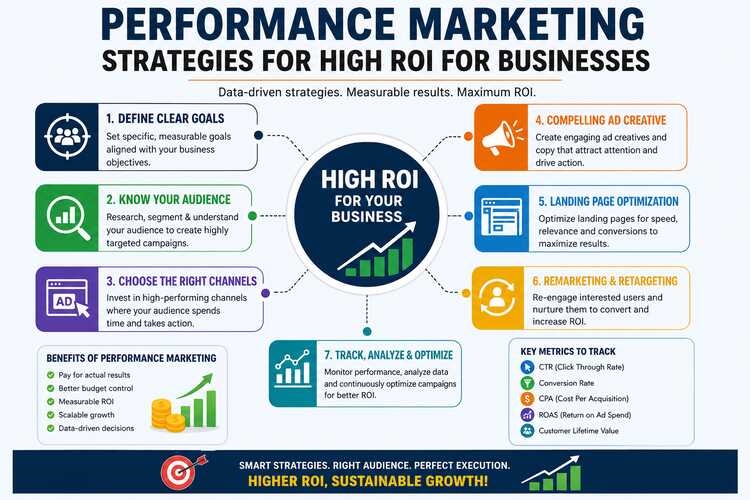
Performance marketing has changed the way businesses think about advertising. Instead of simply paying to get your brand in front of as many people as possible, performance marketing focuses on something much more important: results.
Clicks, leads, sales, bookings, app installs, qualified inquiries, and revenue can all be tracked. This makes it easier to understand where your marketing budget is going and whether it is actually contributing to business growth. But there is one catch.
Running Google Ads, Meta Ads, LinkedIn Ads, or other paid campaigns does not automatically mean you are doing performance marketing well. You can spend thousands on advertising and still generate disappointing returns if your targeting, messaging, landing pages, tracking, or optimization strategy is weak. The real goal is not simply to get more traffic.
The goal is to generate more valuable results from every marketing dollar you spend.
This guide explores practical performance marketing strategies that can help businesses improve ROI, reduce wasted ad spend, generate better-quality leads, and build campaigns that become more profitable over time.
In today’s highly competitive digital landscape, businesses are constantly looking for ways to generate better returns from every marketing rupee they invest. Traditional advertising can sometimes consume significant budgets without providing a clear picture of what is actually driving results.
That’s where performance marketing makes a difference. Best Performance Marketing Strategies for High ROI In today’s competitive digital landscape, businesses face a constant challenge.
Performance marketing is a data-driven approach focused on measurable outcomes such as clicks, leads, sign-ups, and sales. Instead of relying solely on visibility or reach, businesses can track performance, identify what works, and optimize campaigns in real time. The result? A more accountable and efficient marketing strategy that focuses on generating tangible business outcomes.
In this blog, we’ll explore some of the most effective performance marketing strategies for improving ROI, along with practical optimization techniques to help businesses turn their marketing investments into sustainable growth.
What Is Performance Marketing?
Performance marketing is a results-focused approach to digital advertising where campaigns are planned, measured, and optimized around specific business outcomes. Depending on the business model, those outcomes could include:
- Product purchases
- Qualified leads
- Phone calls
- Appointment bookings
- Form submissions
- Free trials
- App downloads
- Demo requests
- Subscription sign-ups
- Revenue
- Customer acquisition
For example, an ecommerce company may measure performance based on purchases and revenue, while a B2B company may focus on qualified leads and sales opportunities. A local service business might care more about phone calls and booked appointments. The important part is that marketing activity is connected to measurable business results.
Why Does ROI Matter in Performance Marketing?
Return on Investment (ROI) measures the revenue generated in relation to the amount invested in marketing. For business owners and marketing teams, it is one of the most important indicators of whether a campaign is delivering real value. In performance marketing, ROI is not something you evaluate only after a campaign ends. It is at the heart of the entire strategy.
Unlike traditional advertising, where businesses often pay for exposure without knowing exactly how many people will take action, performance marketing allows brands to measure specific outcomes. Whether the goal is generating leads, increasing website traffic, driving app installs, or making sales, every stage of the customer journey can be monitored.
With tools such as analytics platforms, attribution systems, and conversion tracking, marketers can understand which channels and campaigns are generating results. This makes it easier to allocate budgets effectively, eliminate underperforming campaigns, and continuously improve overall performance.
Simply put, successful performance marketing brings together creative thinking, accurate data, and continuous optimization to generate measurable business growth.
Why ROI Matters for Businesses in Performance Marketing
ROI, or Return on Investment, helps you understand whether the money invested in marketing is generating enough value in return.
A simple ROI formula is:
ROI = (Revenue Generated – Marketing Cost) ÷ Marketing Cost × 100
For example, imagine a business spends $5,000 on advertising and generates $20,000 in revenue.
ROI would be:
($20,000 – $5,000) ÷ $5,000 × 100 = 300%
That means the campaign generated $3 in profit-equivalent return for every $1 spent on advertising, before considering other business costs.
However, revenue alone doesn’t tell the whole story.
A campaign generating 100 leads may look impressive, but if only two leads become customers, its actual business value could be poor.
That is why high-ROI performance marketing goes beyond vanity metrics such as impressions, clicks, and likes.
Key Features of a High-ROI Performance Marketing Strategy
A strong performance marketing strategy usually includes several important components.
Measurable Campaign Goals
Every campaign should have a clear objective. Instead of saying:
“We want more traffic.”
Set a measurable goal such as:
“Generate 200 qualified leads per month at a target cost per lead of $40.”
This gives your marketing team something concrete to optimize.
Precise Audience Targeting
Performance marketing works best when advertisements reach people who are genuinely likely to buy. Targeting can be based on:
- Location
- Age
- Interests
- Search intent
- Job title
- Industry
- Website behavior
- Previous purchases
- Customer lists
- Remarketing audiences
The more relevant your audience is, the less money you are likely to waste reaching people who have no intention of becoming customers.
Conversion Tracking
You need to know what happens after someone clicks your advertisement. Tracking can help identify whether users:
- Submit forms
- Make purchases
- Call your business
- Book appointments
- Download resources
- Start checkout
- Complete checkout
- Request a quote
Without reliable tracking, optimization becomes guesswork.
Continuous Optimization
Performance marketing is not a “launch it and forget it” activity. Campaigns should be regularly reviewed and improved based on actual data. That can include:
- Adjusting bids
- Removing poor-performing keywords
- Testing new audiences
- Improving ad copy
- Testing landing pages
- Shifting budgets
- Updating creatives
- Improving conversion rates
Data-Driven Decision Making
Instead of making decisions based on assumptions, use campaign data to determine what is working. For example, if one audience generates leads at $25 each and another costs $70 per lead, you may want to allocate more budget toward the better-performing audience.
12 Performance Marketing Strategies for High ROI
Start With Clear Business Goals
Before launching a campaign, define exactly what success looks like. Your goal could be:
- Generate 50 qualified leads
- Increase ecommerce revenue by 30%
- Reduce customer acquisition cost by 20%
- Generate 100 demo requests
- Achieve a specific ROAS
- Increase repeat purchases
Your advertising strategy should be built around this goal.
Example
Suppose a solar company wants more installation inquiries. Instead of optimizing purely for website traffic, the campaign could be designed around:
Goal: 100 qualified installation leads per month
Target CPL: $50
Monthly advertising budget: $5,000
Now the campaign has a clear performance benchmark.
Focus on High-Intent Traffic
Not every visitor has the same value. Someone searching for:
“What is solar energy?”
is at a very different stage of the buying journey from someone searching for:
“solar panel installation company near me.”
The second search demonstrates much stronger commercial intent.
Performance marketers should prioritize audiences that are closer to taking action.
High-intent signals can include:
- Product searches
- Service-specific searches
- “Near me” searches
- Pricing searches
- Comparison searches
- Demo requests
- Quote searches
- Purchase behavior
- Cart activity
The closer someone is to making a buying decision, the greater the potential value of reaching them.
Build Campaigns Around Customer Intent
One of the easiest ways to waste advertising money is to put every audience into the same campaign. Instead, segment campaigns according to intent. For example, a Google Ads campaign for a digital marketing agency could include separate groups for:
- SEO services
- Google Ads management
- Ecommerce SEO
- Local SEO
- Enterprise SEO
- Competitor-related searches
This makes it easier to create relevant advertisements and landing pages.
Why this improves ROI
When the keyword, advertisement, and landing page all address the same intent, users are more likely to engage and convert. That can improve:
- Click-through rate
- Quality Score
- Conversion rate
- Cost per conversion
- Overall campaign efficiency
Create Landing Pages That Sell
Getting someone to click your advertisement is only half the job. The landing page needs to convince them to take the next step. A high-converting landing page should answer questions such as:
- What does the company offer?
- Who is the service for?
- What problem does it solve?
- Why should the visitor trust the business?
- What makes the offer different?
- What should the visitor do next?
Important landing page elements
- Clear headline
- Strong value proposition
- Relevant supporting copy
- Benefits
- Social proof
- Testimonials
- Case studies
- Trust signals
- Relevant images
- FAQs
- Strong call to action
- Simple contact or purchase process
Example
Instead of using a generic headline like:
“Welcome to Our Digital Marketing Agency”
a more focused headline could be:
“Generate More Qualified Leads With ROI-Focused Google Ads Management”
The second headline immediately communicates the value of the service.
Use Conversion Rate Optimization
You don’t always need more traffic to generate more revenue. Sometimes you simply need to convert more of the traffic you already have. Imagine your website receives 10,000 visitors every month and converts 2% of them. That’s 200 conversions.
If optimization increases the conversion rate to 3%, the same traffic produces 300 conversions. You generated 50% more conversions without increasing traffic by 50%.
That’s why Conversion Rate Optimization (CRO) is such an important part of performance marketing.
CRO strategies include:
- Testing headlines
- Improving calls to action
- Simplifying forms
- Reducing unnecessary navigation
- Adding testimonials
- Improving page speed
- Testing layouts
- Adding trust badges
- Improving product descriptions
- Making mobile experiences easier
Use Remarketing to Recover Lost Opportunities
Most people won’t convert the first time they interact with a business. They may visit your website, browse a product, compare competitors, and leave. That doesn’t necessarily mean they aren’t interested. Remarketing gives you another opportunity to reach them.
For example:
A visitor lands on your ecommerce product page but doesn’t purchase. You can later show them an advertisement featuring:
- The same product
- Related products
- A limited-time offer
- Customer reviews
- Free shipping
- A useful reminder
Remarketing can be particularly effective because you’re advertising to people who have already demonstrated some level of interest.
Test Multiple Ad Creatives
One advertisement rarely stays the best performer forever. Consumer behaviour changes. Competitors change their messaging. Audience preferences change. That’s why testing is essential. You can test:
- Headlines
- Primary copy
- Images
- Videos
- Offers
- CTAs
- Benefits
- Testimonials
- Different angles
Example
An HVAC company might test:
Ad A:
“Need AC Repair? Book a Local HVAC Expert Today.”
Ad B:
“AC Not Cooling? Get Fast HVAC Repair From Local Professionals.”
Both advertisements promote the same service, but the messaging angle is different. After collecting enough data, the company can identify which message generates better-quality leads.
Optimize for Quality, Not Just Quantity
This is especially important for lead-generation campaigns. A cheap lead isn’t necessarily a good lead. Imagine two campaigns:
| Campaign | Leads | Cost per Lead | Qualified Leads |
| Campaign A | 200 | $20 | 15 |
| Campaign B | 100 | $35 | 45 |
At first glance, Campaign A looks better because it generates cheaper leads. But Campaign B generates three times as many qualified prospects.
The real performance winner may therefore be Campaign B. This is why businesses should track metrics beyond CPL. Useful metrics include:
- Cost per qualified lead
- Lead-to-customer rate
- Customer acquisition cost
- Revenue per lead
- Customer lifetime value
- ROAS
- ROI
Connect Marketing Data With Sales Data
Marketing performance shouldn’t end when someone submits a form. What happens afterward matters. A proper reporting system should ideally connect:
Ad → Click → Lead → Qualified Lead → Sales Opportunity → Customer → Revenue
This gives you a much clearer picture of campaign profitability.
For example, you might discover that:
- Google Ads generates 100 leads
- 40 become qualified
- 15 become sales opportunities
- 8 become customers
- Customers generate $40,000 in revenue
Now you can evaluate the advertising campaign based on actual business revenue rather than simply the number of leads.
Allocate Budget Based on Performance
Don’t divide your advertising budget equally just because every campaign deserves “some budget.” Your budget should follow performance. Suppose you run three campaigns:
- Campaign A: ROAS 2.1x
- Campaign B: ROAS 4.8x
- Campaign C: ROAS 1.4x
Instead of giving all three campaigns the same budget, you may investigate whether Campaign B can absorb more spend profitably. At the same time, Campaign C may need optimization, restructuring, or reduced spending. The key is to scale what works while fixing or eliminating what doesn’t.
Use Automation Carefully
Modern advertising platforms provide extensive automation. Automated bidding, audience optimization, campaign recommendations, dynamic creatives, and machine learning can help marketers manage campaigns more efficiently. But automation isn’t a substitute for strategy. Automation works best when it has:
- Accurate conversion data
- Sufficient campaign data
- Clear objectives
- Appropriate conversion actions
- Good audience signals
- Strong creative assets
If you’re feeding poor data into the system, automation can simply optimize toward the wrong outcome faster.
Increase Customer Lifetime Value
High ROI isn’t always about getting the cheapest first purchase. Sometimes the biggest opportunity is getting more value from existing customers. For example, suppose a customer initially spends $100. You could potentially increase their lifetime value through:
- Upselling
- Cross-selling
- Subscription offers
- Loyalty programs
- Repeat-purchase campaigns
- Email marketing
- Remarketing
- Personalized offers
If a customer eventually generates $600 in total revenue, paying $100 to acquire that customer may be much more reasonable than it initially appears. That’s why performance marketers should consider Customer Lifetime Value (CLV) alongside acquisition costs.
Performance Marketing Channels to Consider
Different channels work for different business models.
Google Ads
Google Ads can be particularly powerful for capturing existing demand. People are already searching for products and services, which can make search advertising highly valuable for businesses with strong commercial-intent keywords. Common use cases include:
- Local services
- B2B services
- Ecommerce
- SaaS
- Healthcare
- Education
- Home services
Meta Ads
Meta advertising can be useful for generating demand and reaching highly specific audiences. It can work particularly well for:
- Ecommerce
- Fashion
- Beauty
- Education
- Real estate
- Consumer services
- Lead generation
Creative quality is especially important because users aren’t necessarily searching for your product when they see the advertisement.
LinkedIn Ads
LinkedIn can be valuable for B2B companies targeting specific professional audiences. You can target based on factors such as:
- Job roles
- Industries
- Company size
- Seniority
- Professional attributes
For high-value B2B products or services, the higher advertising cost can sometimes make sense if the resulting customers are worth significantly more.
Email Marketing
Email remains an important part of performance marketing because it allows businesses to communicate with people who have already shown interest. Businesses can use email for:
- Lead nurturing
- Abandoned carts
- Product recommendations
- Upselling
- Cross-selling
- Customer retention
- Promotional campaigns
Best Performance Marketing Strategies for Maximum ROI
Let’s look at some of the most effective strategies businesses can use to improve campaign performance and maximize their marketing ROI.
PPC Advertising: Google and Meta Ads
Pay-per-click (PPC) advertising is one of the most effective ways to reach potential customers who are actively searching for a product or service. From Google Search Ads and YouTube campaigns to Meta’s image, video, and carousel ads, PPC gives businesses the ability to reach highly specific audiences while maintaining control over their advertising budgets.
Why PPC works:
- Provides quick visibility and targeted traffic
- Allows precise audience and keyword targeting
- Offers flexible budgets and scalable campaigns
- Provides measurable performance data
- Makes it possible to optimize campaigns based on real-time results
How to improve PPC ROI:
- Focus on high-intent keywords
- Write clear and compelling ad copy
- Use strong calls to action
- Test different audiences, placements, and creatives
- Create landing pages that closely match the ad message
- Monitor metrics such as Cost per Acquisition (CPA), Conversion Rate (CVR), and Return on Ad Spend (ROAS)
Pro Tip: Don’t judge a PPC campaign solely by clicks. A campaign that generates inexpensive traffic but few conversions may be costing you more than it appears.
Retargeting and Remarketing Campaigns
Not every visitor is ready to make a purchase the first time they interact with your brand. Some may be researching their options, comparing prices, or simply not ready to take action yet. Retargeting allows businesses to reconnect with these users after they have visited a website, interacted with an advertisement, viewed a product, or engaged with an app. Because these users have already shown some level of interest, retargeting can be an effective way to move warm prospects closer to conversion.
Why retargeting works:
- Keeps your brand visible to potential customers
- Re-engages users who have already interacted with your business
- Helps recover abandoned carts and incomplete conversions
- Allows businesses to create more personalized messaging
Common retargeting channels include:
- Google Display and YouTube
- Meta advertising platforms
- Email remarketing
- Website and app-based remarketing campaigns
Pro Tip: Avoid showing the same message repeatedly. Tailor your ads based on user behaviour, for example, showcase product benefits to one audience and offer a limited-time incentive to users who have already visited a product page.
Conversion Rate Optimization for Landing Pages
Driving traffic to your website is only half the job. If visitors leave without taking the desired action, even a well-performing advertising campaign can become expensive. This is where Conversion Rate Optimization (CRO) becomes essential.
CRO focuses on improving landing pages and user journeys so that a higher percentage of visitors complete the desired action, whether that means filling out a form, making a purchase, booking a consultation, or signing up for a service.
Effective CRO techniques include:
- Keep the landing page simple and focused
- Use a clear and prominent call to action
- Highlight key benefits rather than overwhelming users with information
- Include reviews, testimonials, and other forms of social proof
- Optimize the page for mobile devices
- Improve page loading speed
- Reduce unnecessary form fields
- Test different headlines, layouts, and CTAs
Pro Tip: Use heatmaps, session recordings, and conversion data to understand where visitors lose interest. Small improvements to the user experience can have a significant impact on overall campaign profitability.
A/B Testing for Ads and Creatives
Successful performance marketing leaves little room for guesswork. A/B testing helps marketers make decisions based on actual user behaviour rather than assumptions. The idea is simple: create two variations of an ad element and compare their performance. This could be a headline, image, video, CTA, offer, or landing page.
Why A/B testing matters:
- Identifies which creative elements perform best
- Reduces wasted advertising spend
- Helps understand audience preferences
- Supports continuous campaign improvement
- Can improve conversion rates over time
Elements worth testing include:
- Headlines
- Ad copy
- Calls to action
- Images and videos
- Offers and discounts
- Landing page layouts
- Audience segments
For example, an e-commerce brand may discover that “Shop Now” generates more purchases than a softer CTA such as “Learn More.” Rather than relying on assumptions, A/B testing provides the data needed to make that decision confidently.
Pro Tip: Test one major variable at a time whenever possible. This makes it easier to understand what actually influenced the result.
Influencer Marketing with Performance-Based Partnerships
Influencer marketing has evolved beyond celebrity endorsements. Today, brands can work with micro- and niche influencers whose audiences are highly relevant to their products or services. A performance-based partnership can make influencer campaigns even more accountable by tying compensation or incentives to measurable outcomes such as clicks, leads, or sales.
Why performance-based influencer marketing can work well:
- Builds trust through authentic recommendations
- Helps brands reach highly relevant niche audiences
- Can be more cost-effective than large-scale influencer campaigns
- Works particularly well across beauty, fashion, fitness, wellness, food, and lifestyle categories
How to measure influencer ROI:
- Use unique UTM links
- Create individual affiliate or promotional codes
- Track website traffic and conversions
- Define clear campaign objectives before launch
- Measure revenue generated against campaign costs
Pro Tip: Instead of treating influencers as one-off promotional channels, consider building long-term relationships with creators who consistently deliver quality engagement and conversions.
Common Performance Marketing Mistakes to Avoid
Even a well-planned campaign can underperform if some fundamental elements are overlooked.
Poor Audience Targeting
Showing your ads to the wrong audience can quickly increase costs without generating meaningful results.
Solution: Use audience segmentation, lookalike audiences, retargeting lists, and behavioral data to reach people who are more likely to convert.
Ignoring Analytics and Performance Data
Without accurate tracking, it is difficult to know which campaigns are generating revenue and which are simply generating activity.
Solution: Monitor key metrics such as CPA, ROAS, CTR, conversion rate, and bounce rate. Use reliable analytics and advertising platforms to make informed decisions.
Sending All Traffic to the Same Landing Page
A generic landing page may not address the specific needs or intent of every audience segment.
Solution: Create landing pages that align with individual campaigns, keywords, offers, and audience intent.
Focusing on Clicks Instead of Conversions
A high click-through rate can look impressive, but clicks alone do not necessarily translate into business growth.
Solution: Measure the complete customer journey and prioritize meaningful outcomes such as qualified leads, purchases, revenue, and ROAS.
Real-World Performance Marketing Examples
Example 1: Ecommerce Business
Imagine an online fashion store spending $10,000 per month on paid advertising. Initially:
- Ad spend: $10,000
- Revenue: $25,000
- ROAS: 2.5x
After analyzing campaign data, the company discovers that:
- Certain products have much higher conversion rates
- Some audiences generate low-value orders
- Mobile checkout has a high abandonment rate
- Remarketing produces strong returns
The company then:
- Shifts budget toward high-performing products.
- Improves the mobile checkout process.
- Creates product-specific remarketing campaigns.
- Tests new creative variations.
- Excludes low-value audiences.
Suppose revenue increases to $40,000 without increasing the advertising budget.
ROAS becomes:
$40,000 ÷ $10,000 = 4x
The company has significantly improved advertising efficiency.
Example 2: B2B Digital Marketing Agency
A digital marketing agency spends $5,000 per month on Google Ads. The campaign generates:
- 100 leads
- 40 qualified leads
- 15 sales calls
- 5 new customers
The agency discovers that some keywords generate lots of inexpensive leads but very few customers. Meanwhile, several expensive keywords generate fewer leads but much higher-value clients. The agency shifts its focus toward those high-value keywords.
The number of leads may decrease, but the number of customers and total revenue increase. That’s a perfect example of why quality beats quantity in performance marketing.
Example 3: Local HVAC Company
An HVAC company wants more service calls. Instead of targeting broad terms such as:
“air conditioning”
it focuses on more commercial searches such as:
- AC repair near me
- emergency AC repair
- HVAC repair company
- AC installation near me
- furnace repair service
The business also creates dedicated landing pages for each service. It tracks:
- Phone calls
- Quote requests
- Booked appointments
- Qualified leads
- Customers
Over time, the company can identify exactly which services and keywords generate the highest revenue.
Important Performance Marketing Metrics
If you want to improve your marketing ROI, you need to look beyond clicks and impressions. The right performance marketing metrics help you understand what is working, where your budget is being spent, and whether your campaigns are actually contributing to business growth. Here are some of the most important metrics every marketer should keep an eye on:
Click-Through Rate (CTR)
CTR shows the percentage of people who click on your advertisement after seeing it. A higher CTR generally indicates that your ad copy, creative, or offer is relevant and appealing to your target audience.
Conversion Rate
Conversion Rate measures the percentage of users who complete a desired action, such as making a purchase, submitting a form, signing up, or requesting a consultation. It helps you understand how effectively your website or landing page turns visitors into customers or leads.
Cost Per Click (CPC)
CPC tells you how much you are paying, on average, for every click on your advertisement. Keeping an eye on CPC helps you understand whether you are getting quality traffic within your advertising budget.
Cost Per Lead (CPL)
CPL measures the average amount you spend to generate one lead. It is particularly useful for businesses that rely on enquiries, registrations, or form submissions to generate sales.
Cost Per Acquisition (CPA)
CPA shows the average cost of acquiring a customer or generating a specific conversion. A lower CPA generally means your campaign is acquiring customers more efficiently.
Return on Ad Spend (ROAS)
ROAS measures how much revenue you generate for every rupee spent on advertising. It is one of the most useful metrics for understanding the direct financial performance of an ad campaign.
ROAS = Revenue Generated ÷ Advertising Spend
For example, if you spend ₹10,000 on ads and generate ₹40,000 in revenue, your ROAS is 4x.
Customer Acquisition Cost (CAC)
CAC measures the overall cost of acquiring a new customer. Unlike CPA, CAC can include broader marketing and sales expenses, giving you a more complete picture of what it takes to bring a new customer to your business.
Customer Lifetime Value (CLV)
CLV estimates the total value or revenue a customer is likely to generate throughout their relationship with your business. Comparing CLV with CAC can help you understand whether your customer acquisition strategy is sustainable in the long run.
ROI
ROI (Return on Investment) provides a broader view of how profitable your marketing investment is. While ROAS focuses specifically on advertising revenue, ROI can take other associated costs into account, making it useful for evaluating the overall financial impact of a marketing initiative.
The key takeaway: Don’t rely on a single metric. Looking at CTR, conversion rate, CPA, ROAS, CAC, and CLV together gives you a clearer picture of campaign performance and helps you make smarter, data-driven marketing decisions.
Common Performance Marketing Mistakes to Avoid
Optimizing for Vanity Metrics
Thousands of impressions don’t matter much if nobody buys. Focus on metrics that connect to business outcomes.
Sending Every Ad to the Homepage
A generic homepage often doesn’t match the specific intent behind an advertisement. Use relevant landing pages whenever possible.
Ignoring Mobile Users
A campaign may perform well on desktop but struggle on mobile. Always review:
- Page speed
- Form usability
- Navigation
- Checkout
- CTA placement
- Mobile design
Making Decisions Too Quickly
Performance marketing requires data. Don’t immediately pause a campaign because it had a bad day. Look for meaningful patterns and consider factors such as conversion volume, sales cycle, seasonality, and audience behavior.
Chasing Cheap Leads
A $10 lead that never becomes a customer may be far less valuable than a $50 lead that produces a $5,000 sale.
Ignoring Existing Customers
Acquiring new customers isn’t the only way to grow revenue. Retention, repeat purchases, upselling, and cross-selling can dramatically improve overall marketing economics.
How to Build a High-ROI Performance Marketing Framework
A strong performance marketing strategy doesn’t happen by simply launching ads and waiting for results. It requires a clear process that connects your business goals, target audience, campaigns, tracking, and ongoing optimization.
Here’s a practical 10-step framework you can follow to build a performance marketing strategy focused on sustainable ROI.
Step 1: Define Your Business Objective
Start with a clear understanding of what you want to achieve. Your goal could be generating qualified leads, increasing online sales, improving customer acquisition, or growing revenue. A well-defined objective gives your campaigns a clear direction and makes it easier to measure success.
Step 2: Identify Your Ideal Customer
Understand who your best customers are. Look at factors such as demographics, interests, buying behavior, pain points, and previous interactions with your brand. The better you understand your audience, the easier it becomes to create campaigns that genuinely connect with them.
Step 3: Map Customer Intent
Not every potential customer is ready to buy. Identify what your audience searches for at different stages of their buying journey and which actions indicate stronger purchase intent. This helps you deliver the right message at the right time.
Step 4: Select the Right Marketing Channels
You don’t need to be present on every advertising platform. Choose channels based on where your target audience spends time and how they typically research and make purchasing decisions. For example, search advertising may work well for high-intent users, while social media can be effective for discovery and engagement.
Step 5: Create Relevant Campaigns
Make sure your audience, ad creative, messaging, offer, and landing page work together. When the experience feels consistent from the first ad click to the final conversion, users are more likely to trust your brand and take action.
Step 6: Implement Accurate Tracking
Set up proper conversion tracking before spending heavily on campaigns. Track meaningful actions such as leads, purchases, sign-ups, and revenue wherever possible. Accurate data allows you to understand what is actually driving business results.
Step 7: Run Multiple Tests
Avoid relying on a single version of your campaign. Test different audiences, ad creatives, headlines, offers, keywords, calls to action, and landing pages. Testing helps you discover what resonates with your audience and reduces dependence on guesswork.
Step 8: Analyze Performance
Regularly review your campaign data, but don’t focus only on surface-level metrics such as clicks or impressions. Look at conversion rates, CPA, ROAS, revenue, lead quality, and other business outcomes to understand the true performance of your campaigns.
Step 9: Optimize Continuously
Use your performance data to make informed decisions. Increase investment in campaigns, audiences, and creatives that consistently deliver good results. At the same time, adjust, pause, or improve areas that are consuming budget without producing meaningful outcomes.
Step 10: Scale Carefully
Once you identify a winning campaign, resist the temptation to increase the budget too quickly. Scale gradually while monitoring costs, conversion rates, and overall efficiency. Controlled scaling helps you grow revenue without unnecessarily reducing profitability.
A high-ROI performance marketing framework is not a one-time setup. It is an ongoing cycle of planning, testing, measuring, learning, and optimizing. When each step is connected to a clear business objective, your marketing becomes more predictable, efficient, and capable of supporting long-term growth.
Benefits of Performance Marketing for Businesses
A properly managed performance marketing strategy can provide several advantages.
Better Budget Control
You can see where your advertising money is being spent and identify areas that aren’t delivering sufficient value.
Measurable Results
Campaigns can be tracked using concrete metrics instead of relying solely on brand awareness.
Better Targeting
Businesses can reach audiences based on intent, demographics, behavior, interests, and previous interactions.
Faster Optimization
Because campaign data is available continuously, marketers can identify opportunities and make adjustments relatively quickly.
Improved Conversion Rates
Better targeting, messaging, landing pages, and offers can help turn more visitors into customers.
Greater Scalability
Once a profitable acquisition process has been identified, businesses can potentially increase budgets and expand into new audiences or markets.
Stronger Customer Insights
Performance campaigns generate valuable data about customer behavior, preferences, objections, and purchasing patterns.
The Real Secret to High ROI
There isn’t a single “magic” performance marketing strategy that works for every business. The highest ROI usually comes from combining several small improvements.
Maybe your targeting improves by 10%.
Your landing page conversion rate improves by 20%.
Your average order value increases by 15%.
Your remarketing campaign generates additional purchases.
Your sales team improves lead follow-up.
Individually, these changes may not seem revolutionary. Together, they can dramatically change the economics of your marketing. That’s the real power of performance marketing.
Don’t focus only on getting more clicks. Focus on creating a better system from click to customer.
Final Thoughts
Performance marketing is ultimately about accountability. Instead of asking:
“How many people saw our advertisement?”
you start asking:
“How many valuable customers did our marketing generate, and what did it cost us?”
That shift in thinking can completely change how a business approaches digital advertising.
High-ROI campaigns aren’t built by blindly increasing budgets. They’re built through better targeting, stronger offers, relevant landing pages, accurate tracking, continuous testing, and smart budget allocation.
Whether you’re running Google Ads, Meta Ads, LinkedIn campaigns, ecommerce advertising, or lead-generation campaigns, the objective remains the same:
Spend smarter, learn from the data, improve the customer journey, and scale what actually works.
When performance marketing is treated as an ongoing growth system rather than simply an advertising expense, it can become one of the most powerful ways to generate predictable and measurable business growth.
Performance marketing is ultimately about making every marketing decision more measurable, accountable, and effective.
From PPC advertising and retargeting to conversion optimization, A/B testing, and performance-based influencer partnerships, the right combination of strategies can help businesses reduce wasted spend and generate stronger returns.
However, achieving consistently high ROI requires more than simply launching campaigns. It requires the right strategy, accurate tracking, ongoing testing, and continuous optimization. That’s where the right marketing partner can make a meaningful difference.
At Digital Advertisers, we help businesses turn marketing efforts into measurable growth. From planning and launching campaigns to optimizing high-performing funnels, our focus is on creating strategies that connect marketing spend with real business results.