seolounge
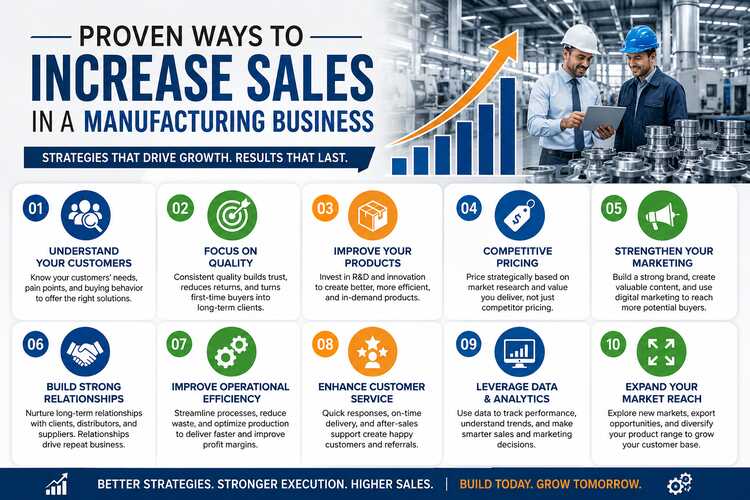
Growing manufacturing sales is not just about pushing harder. It is about improving the sales process in ways that match how buyers actually make decisions. In a manufacturing business, you often deal with technical products, long buying timelines, and several stakeholders at once. That can make progress feel slow. The good news is that smart changes can help you build trust, shorten delays, and win more deals. The ideas below show where to focus first.
Growing sales in a manufacturing business takes more than simply producing a great product. You need to reach the right customers, understand what they actually need, build strong relationships, and make it easy for them to choose your business over competitors. From improving your online presence and strengthening your sales process to focusing on customer retention and targeted marketing, there are several practical ways manufacturers can increase revenue. By combining better lead generation with a customer-focused approach, businesses can attract more qualified prospects, convert them into customers, and build steady long-term growth.
Top Ways to Increase Sales in Manufacturing Business
The most effective strategies to increase sales in a manufacturing business are practical and connected. You need a stronger sales approach and strategies, better team alignment, smarter use of technology, and customer service that removes friction from the buying journey.
For a manufacturing company, results often come from improving the full sales cycle, not just one stage. That means auditing your process, using digital channels, building better customer relationships, and helping reps work faster with better tools. The ideas below can help you create steady gains.
Audit and Refine Your Current Sales Strategies
Start by looking closely at your current manufacturing sales strategy. If your sales process includes outdated tools, duplicated steps, or unclear handoffs, your team will lose time and momentum that’s crucial to close deals. In a competitive market, small gaps can quietly reduce close rates.
Next, review your key numbers. Check customer acquisition costs, conversion rates, revenue by product line, and places where prospects leave the funnel. If buyers drop off after early calls, your message may not match the right audience. If proposals stall, your internal steps may be too slow.
What are the most effective strategies to increase sales in a manufacturing business? One of the best is regular auditing. It creates continuous improvement by showing where delays, weak messaging, or poor fit in inventory management are hurting results. Then you can fix the exact stage that needs attention.
Align Sales, Marketing, and Product Development Teams
When sales teams, the marketing team, and product development work in silos, customers notice. Promises become inconsistent, delivery expectations get fuzzy, and deals slow down. In a manufacturing company, this can be especially damaging because buyers often ask detailed questions about what your ideal customer looks like before they commit.
A better approach is open communication with shared goals. Regular meetings, shared data, and clear feedback loops help each group understand what customers ask for most. Factory visits and production-floor exposure can also help marketing create more accurate materials and improve sales enablement.
This alignment also supports training. How does sales team training play a role in boosting manufacturing sales? It works better when reps understand production limits, lead times, and customization options. Trained teams speak with more confidence, set realistic expectations, and reduce mistakes that can hurt trust.
Invest in Targeted Digital Marketing for Manufacturing
If buyers cannot find you online, you lose opportunities before a conversation even starts. Targeted digital marketing helps manufacturing companies reach decision-makers earlier and support lead generation with useful, relevant content throughout the buying process.
Your marketing efforts should focus on the channels your audience already uses. That can include LinkedIn outreach, webinars, targeted email campaigns, and website content built around technical questions. Social media also helps you share success stories, product insights, and proof that your team understands real customer needs.
Can you suggest actionable marketing ideas specifically for manufacturing companies? Yes. Build a stronger online presence with content that helps buyers research specifications, compare options, and request quotes. This kind of digital marketing supports both inbound interest and stronger trust before a rep ever reaches out.
Implement a CRM System to Streamline Sales Operations
A CRM system gives your team one place to manage leads, accounts, follow-ups, and performance, which is essential for a growing business. Without it, sales reps often rely on scattered notes, inboxes, and spreadsheets. That makes the sales cycle harder to track and easier to lose control of.
In manufacturing, customer relationship management matters because buyers expect accurate updates and timely answers. Good crm software helps your team collect sales data, score leads, monitor campaign results, and spot weak points in the pipeline before they turn into lost revenue. How does implementing a CRM system help improve sales in manufacturing? It improves visibility, speed, and consistency.
| CRM Function | How It Supports Sales |
| Lead capture | Brings inquiries into one system for faster follow-up |
| Lead scoring | Helps teams focus on the most qualified prospects |
| Reporting | Shows trends in sales data and campaign performance |
| Shared customer records | Supports better customer relationship management across teams |
| Process automation | Reduces delays and keeps the sales cycle moving |
Enhance Customer Experience and Build Strong Relationships
Buyers remember how easy or hard it was to work with you. That is why customer experience has a direct effect on revenue. In manufacturing, even strong products can lose ground if communication is slow or support feels inconsistent.
Focus on customer service before, during, and after the sale. Give buyers clear contacts, fast answers to technical questions, and support materials that help them compare options. Strong customer support can also include self-serve resources like FAQs and product documentation.
How do I market my manufacturing business to attract more customers? Start by creating positive experiences that turn into trust. Happy customers are more likely to stay, recommend you, and place repeat orders. Over time, that builds customer loyalty and stronger long-term relationships that support steady growth.
Train and Empower Your Sales Team with Modern Techniques
Your sales team cannot sell complex solutions well without the right support. Manufacturing buyers often ask about specs, compliance, customization, and delivery timing. If sales reps hesitate, trust drops quickly.
That is why sales training matters. Reps need strong product knowledge, clear messaging, and practical tools that help them answer questions with confidence. Sales enablement also plays a part by giving them updated collateral, customer insights, and systems that reduce time spent on admin work.
What role does sales team training play in boosting manufacturing sales? It helps reps qualify better, present value more clearly, and avoid mistakes that slow deals. A well-prepared team can guide buyers through technical decisions, handle objections, and keep opportunities moving toward a close.
Strengthen Your Value Proposition and Unique Selling Points
In a crowded market, buyers need a clear reason to choose you. A strong value proposition explains why your manufacturing business is the better fit. It should make your unique selling points easy to understand and easy to remember.
Keep your sales pitches tied to what matters most to the buyer. That could be efficiency, cost control, compliance, customization, or support. The goal is to show specific benefits, not vague claims. Case studies and testimonials can also make your message more believable. What are proven tips for quickly increasing manufacturing sales? Sharpen your positioning around benefits like these:
- Lower long-term operating costs
- Better fit for specialized customer needs
- Reliable support and faster response times
- Stronger performance backed by real results
Leverage Data Analytics to Identify New Sales Opportunities
When you rely on guesswork, growth becomes slower and riskier. Data analytics helps you see what is actually happening across your pipeline, campaigns, and customer base. That makes it easier to focus on the right actions.
Study sales data by source, conversion stage, product line, and buyer type. Combined with market research, this can reveal where demand is rising, where prospects get stuck, and which accounts may be ready for expansion. It also helps you clean up weak spots in the sales funnel.
How can modern sales strategies accelerate growth for manufacturing businesses? They do it by turning data into action. When you spot new sales opportunities early, you can target your target customers, improve timing, and adjust your approach before competitors move in.
Optimize Field Sales Operations and Lead Generation
Field sales still matters in manufacturing because many deals depend on trust, technical discussion, and site-specific needs. In-person contact can be especially useful when products are complex or customized. Still, field activity works best when it is planned and supported by data.
To optimize it, connect field sales with strong lead generation for maximum sales success. Reps should know which accounts are qualified, what stage they are in, and what concerns have already come up. That keeps meetings focused and reduces wasted travel and slow follow-up.
How important is field sales for manufacturing companies, and how can it be optimized? It is important when paired with better targeting, clearer sales funnel visibility, and accurate lead times. That mix helps sales reps prioritize the right opportunities and move them forward faster.
Expand Aftermarket Sales and Offer Custom Solutions
One of the smartest ways to grow is to look beyond the first order. Aftermarket sales create ongoing revenue through spare parts, maintenance, upgrades, and repair services. They also help you stay connected to the customer for the long term, long after the initial deal closes.
Custom solutions can add even more value. If your buyers have specialized needs, tailored product offerings make your business harder to replace. This also improves your sales process because you are solving real operating problems instead of competing on price alone, which can ultimately help boost sales.
Can you share examples of successful sales strategies used by manufacturing businesses? Yes. Many manufacturers grow through aftermarket sales paired with raw materials service reminders, online ordering for replacement parts, and flexible custom solutions that encourage repeat business and deeper customer ties.
Key Highlights
- Strong manufacturing sales start with clear sales strategies and regular process reviews.
- Better alignment across teams improves lead generation and shortens delays.
- A CRM system helps your manufacturing business track prospects and manage follow-ups.
- Targeted digital efforts strengthen customer experience and expand your online reach.
- Sales training gives reps stronger product knowledge and sharper conversations.
- Data, field activity, and aftermarket offers can uncover new revenue and support steady growth.
How to Increase Sales in Manufacturing and Distribution: Proven Strategies for Sustainable Growth
The manufacturing and distribution industry is highly competitive. Having a great product, modern machinery, or an efficient supply chain is no longer enough to guarantee growth. If your manufacturing sales strategy isn’t strong, even an excellent business can struggle to attract new customers and compete in a crowded market.
Here’s something worth thinking about: 91% of sales teams fail to meet their quotas. That number highlights an important reality—having good products doesn’t automatically translate into good sales. Manufacturers need a clear strategy for identifying the right prospects, building relationships, communicating value, and consistently following up.
So, how can manufacturing companies generate better leads, attract serious buyers, and turn more opportunities into revenue? Let’s explore some practical strategies that can help you strengthen your sales process and build a healthier pipeline.
Understanding the Challenges in Manufacturing Sales
Before looking at ways to increase sales, it’s important to understand what makes manufacturing sales challenging in the first place.
Competition Is Fierce
Manufacturers today are competing with businesses from across the country and around the world. Globalization has made it easier for companies to source products, components, raw materials, and equipment from different markets. That means your company isn’t simply competing with the manufacturer down the road. You could be competing with suppliers thousands of miles away.
To stand out, you need to give potential customers a clear reason to choose you. It could be better quality, faster delivery, technical expertise, customization, pricing, after-sales service, or a combination of these factors. The goal is to make your value obvious rather than expecting buyers to figure it out themselves.
The Digital Shift Has Changed How Buyers Research
Manufacturing buyers don’t rely exclusively on trade shows, sales representatives, or cold calls anymore. Today’s B2B buyers often begin their research online. In fact, 60% of B2B buyers research vendors online before reaching out.
This means your website, search visibility, online reviews, LinkedIn presence, and digital content can influence a buyer long before your sales team gets a chance to speak with them. If your website is outdated, difficult to navigate, or doesn’t answer important buyer questions, you may be losing potential customers without even realizing it.
Long Sales Cycles Require Patience
Manufacturing purchases are rarely spontaneous decisions. A buyer may need to compare suppliers, discuss specifications with engineers, obtain management approval, review pricing, assess quality standards, and negotiate contracts before making a final decision. This makes manufacturing sales lead nurturing extremely important.
Instead of contacting a prospect once and moving on when they don’t respond, businesses need a structured follow-up process that keeps the relationship alive and continues providing useful information.
Stagnant Markets Can Limit Growth
Some manufacturing markets experience slow or declining demand because of saturation, changing technologies, outdated product offerings, or shifting customer requirements. When this happens, simply increasing sales efforts may not be enough.
Manufacturers need to look for new opportunities. This could mean developing new products, entering different industries, targeting new geographical markets, or adapting existing solutions to emerging customer needs. Regular market research and product innovation can help businesses avoid becoming dependent on a shrinking market.
Lead Quality Matters More Than Lead Quantity
Getting hundreds of leads sounds great on paper, but what happens if most of them aren’t actually interested in buying? Many manufacturing companies struggle with lead quality because of:
- Poor audience targeting
- Inadequate lead qualification
- Generic outreach
- Incomplete customer data
- Lack of follow-up
- Weak alignment between marketing and sales
Instead of chasing every possible prospect, focus on identifying companies that are genuinely likely to need your products or services. Using lead scoring, CRM systems, and data-driven prospecting can help your sales team prioritize the opportunities that have the greatest potential.
Scaling Operations Alongside Sales
There’s another problem that manufacturers sometimes overlook: what happens when sales increase faster than operations can handle? Production bottlenecks, supply chain problems, staffing limitations, and manual processes can make it difficult to fulfil new orders efficiently. Growth becomes much easier when sales, production, inventory, logistics, and customer service are prepared to scale together. Investing in automation, smart manufacturing, and process optimization can help businesses handle increased demand without sacrificing quality or delivery timelines.
How to Increase Sales in a Manufacturing Business
Once you understand the challenges, the next step is building a sales strategy that addresses them directly.
Build a Sales Strategy Around Your Ideal Customer
A successful manufacturing sales strategy starts with knowing exactly who you want to sell to. Rather than trying to appeal to everyone, define your ideal customer profile (ICP). Ask yourself:
- Who are our most valuable customers?
- Which industries need our products the most?
- What problems are these businesses trying to solve?
- Who makes the purchasing decision?
- What factors influence their supplier selection?
- What makes our company different from competing suppliers?
Once you have these answers, your sales messaging becomes much more focused. Instead of simply saying, “We manufacture high-quality industrial components,” you can explain how those components solve a specific problem for a specific type of customer. That shift from product-focused selling to problem-solving can make your sales conversations far more effective.
Strengthen Your Online Presence
Your website is often the first place a potential buyer goes to learn about your company. Make sure it clearly communicates:
- What you manufacture
- Which industries you serve
- Your product specifications
- Your manufacturing capabilities
- Certifications and quality standards
- Your experience
- Customer success stories
- How buyers can contact you
Your website should also be optimized for search engines so potential customers can find you when they’re actively looking for manufacturing solutions. Alongside SEO, maintain an active LinkedIn presence and consider using paid advertising to reach decision-makers. A few simple ways to improve your online visibility include:
- Publish useful industry insights and case studies regularly.
- Participate in relevant LinkedIn conversations.
- Share product updates, technical information, and customer success stories.
- Use targeted PPC campaigns to reach high-intent buyers.
Create a Useful Online Product Catalogue
Make it easy for potential customers to understand what you offer. A well-organized digital catalogue can answer many initial questions before a sales representative even gets involved. Include detailed product descriptions, specifications, applications, images, technical documents, and other relevant information. You can make the catalogue more useful by adding:
- High-quality product photographs
- 3D product views where appropriate
- Downloadable product brochures and PDFs
- Technical specifications
- Application information
- A simple quote-request option
The easier you make it for buyers to evaluate your products, the easier you make their purchasing journey.
Don’t Underestimate Customer Service
Manufacturing sales shouldn’t end when an order is delivered. Strong customer service can turn a one-time buyer into a long-term client. Respond quickly to questions, provide technical assistance when needed, keep customers updated about orders, and make it easy for them to contact your team. Consider:
- Assigning dedicated account managers to important clients
- Using live chat or AI-assisted support for basic enquiries
- Scheduling regular customer check-ins
- Collecting customer feedback
- Addressing complaints quickly and professionally
A customer who feels supported is much more likely to buy again and recommend your company.
Use Strategic Pricing
Price matters, but competing purely on price can be dangerous. Instead of constantly trying to become the cheapest supplier, create a pricing strategy that balances customer expectations with healthy profit margins. Consider:
- Market demand
- Production costs
- Competitor pricing
- Order volume
- Long-term contracts
- Customer lifetime value
Volume-based pricing and incentives for longer-term agreements can also encourage customers to commit to larger or recurring orders. Regularly review your pricing and ask:
- Are we competitive without damaging our margins?
- Do we offer attractive pricing for bulk orders?
- Are our long-term contract incentives strong enough?
- Does our pricing reflect the value we provide?
Automate Repetitive Sales Tasks
Sales teams spend a surprising amount of time on repetitive activities such as sending follow-up emails, updating CRM records, scheduling reminders, and tracking prospects. Automation can take some of this workload off their shoulders. For example, you can:
- Create automated email sequences for lead nurturing.
- Set CRM reminders for important follow-ups.
- Automatically assign leads to sales representatives.
- Track prospect interactions.
- Automate parts of the order-processing workflow.
The idea isn’t to replace human interaction. It’s to give your sales team more time to focus on conversations that actually require a human touch.
Choose the Right CRM
A good CRM can become the central hub of your sales operation. It allows your team to see where each prospect is in the sales pipeline, track previous conversations, schedule follow-ups, and identify opportunities that may otherwise be forgotten. When choosing a CRM, look for features such as:
- Real-time customer interaction tracking
- Sales pipeline management
- Forecasting and reporting
- Marketing automation integration
- ERP integration
- Lead scoring
- Automated reminders
The right CRM gives your team better visibility and helps turn sales activity into measurable results.
Make Your Sales Message Memorable
Generic sales pitches rarely stand out. Instead of simply listing product features, explain what those features mean for the customer. For example, don’t just say:
“We offer durable industrial parts.”
A stronger message would be:
“Our industrial parts are designed to reduce equipment downtime and help manufacturers maintain more consistent production.”
The second message connects the product to a business outcome. That’s what buyers care about.
Show Proof Instead of Making Big Claims
Manufacturing buyers want evidence. Case studies, testimonials, performance data, certifications, customer reviews, and real-world examples can make your sales message much more credible.
According to the source content, 78% of B2B buyers say case studies influence their purchasing decisions. Whenever possible, show prospects how your solution has helped businesses similar to theirs. Don’t simply tell buyers that your product is reliable. Show them why they should believe you.
Generate Manufacturing Leads Through Multiple Channels
Relying on one source of leads can make your sales pipeline vulnerable. A stronger approach is to use several channels and understand which ones produce the best-quality opportunities.
Email Marketing With a Personal Touch
Nobody enjoys receiving generic promotional emails that clearly went to thousands of people. Personalized emails have a much better chance of getting attention. Research the prospect before reaching out. Mention their industry, a relevant challenge, recent business development, or a problem your solution can realistically address. The goal shouldn’t be to immediately push for a sale. Start a conversation.
Make Cold Calling More Relevant
Cold calling still has a place in B2B manufacturing sales, but the approach matters. Calling someone and immediately launching into a company introduction is unlikely to create much interest. Instead, give the conversation a reason. For example:
“I noticed your company is expanding its production capacity. We’ve helped similar manufacturers increase output without significantly increasing operating costs. Would you be open to a quick conversation?”
This approach is more relevant because it connects the call to the prospect’s potential business needs.
Use LinkedIn for B2B Manufacturing Sales
LinkedIn is much more than a platform for recruitment. For manufacturing businesses, it can be a valuable place to connect with purchasing managers, operations leaders, engineers, business owners, and other decision-makers. Don’t use LinkedIn only to promote your products. Share useful content such as:
- Industry insights
- Manufacturing trends
- Technical knowledge
- Case studies
- Product applications
- Behind-the-scenes manufacturing content
- Customer success stories
When you consistently provide useful information, potential customers have a reason to remember your company.
Use SEO and Content Marketing to Get Found
Today’s buyers often search Google before contacting a supplier. That makes SEO an important part of long-term manufacturing lead generation. Create content around the questions and problems your target customers are actually searching for. For example, a manufacturer could create content around:
- How to choose an industrial component supplier
- Common manufacturing equipment problems
- Benefits of customized industrial parts
- Manufacturing quality standards
- How to reduce production downtime
- Industrial equipment maintenance tips
The source content notes that companies with active blogs generate 67% more website traffic. More relevant traffic creates more opportunities to generate leads. The key is to focus on useful content rather than producing articles simply to insert keywords.
Use PPC and Google Ads for High-Intent Searches
SEO is excellent for long-term visibility, but paid advertising can help businesses reach potential buyers more quickly. Target searches that indicate strong buying intent, such as:
- “Industrial parts supplier”
- “Custom manufacturing solutions”
- “Industrial component manufacturer”
- “Bulk industrial equipment supplier”
The more closely your ads, landing pages, and offers match the searcher’s intent, the better your chances of generating qualified enquiries.
Global Sales Strategies for Manufacturing and Distribution
If your domestic market is becoming crowded, expanding into new regions can open up fresh opportunities.
Explore New Markets
Don’t assume your current market is the only place where your products can succeed. Research industries and regions where demand for your products is growing. Before entering a new market, study:
- Customer demand
- Competitors
- Pricing expectations
- Regulations
- Distribution requirements
- Cultural differences
- Local buying behaviour
Your sales message may also need to change depending on the market. What works in one region may not necessarily work in another.
Work With Distributors and Resellers
You don’t always need to build an entire sales network from scratch. Distributors and resellers can provide access to established customer networks and local market knowledge. The right partners can help you enter new markets more efficiently while reducing some of the challenges associated with building a direct sales presence.
Explore B2B E-Commerce and Online Marketplaces
B2B buyers are increasingly comfortable researching and purchasing products online. Depending on your product category, listing products on relevant B2B marketplaces and e-commerce platforms can put your business in front of buyers who are already looking for suppliers. Make sure your listings contain accurate specifications, clear images, technical information, and an easy way to request a quote or contact your sales team.
Increase Manufacturing Sales With a Customer-Centric Approach
Long-term manufacturing growth isn’t only about finding new customers. It’s also about keeping the customers you already have.
Exceptional Customer Service Builds Loyalty
Customers remember how a company treats them, especially when something goes wrong. Fast responses, proactive communication, reliable delivery, and effective problem-solving can make a major difference. Don’t wait for customers to complain before asking whether everything is going well. Stay connected and look for ways to improve their experience.
Customization Can Set You Apart
Many businesses don’t want a standard product. They want a solution that fits their specific requirements. If your manufacturing capabilities allow customization, make that part of your sales proposition. Customized dimensions, materials, configurations, packaging, or production specifications can help your business stand out from suppliers offering only standard products.
Use CRM and Automation to Work Smarter
As your customer base grows, managing every interaction manually becomes increasingly difficult. A CRM can help your team keep track of leads, customers, follow-ups, quotations, and sales opportunities. According to the source content, CRM systems can improve sales productivity by 29%. Even small improvements in organization can have a significant impact when applied across an entire sales team.
Technology and Innovation: The Future of Manufacturing Sales
Technology isn’t just changing manufacturing operations. It’s changing how companies sell.
Use AI and Predictive Analytics
Artificial intelligence can help sales teams analyze large amounts of customer and sales data to identify patterns and high-potential prospects. Instead of relying entirely on intuition, sales teams can use data to determine:
- Which leads are most likely to convert
- Which customers are most valuable
- Which sales channels perform best
- Where prospects are dropping out of the sales funnel
- Which products are generating the most demand
AI shouldn’t replace the sales team. It should help them make better decisions.
Embrace Industry 4.0
Automation, IoT, connected machinery, robotics, and data analytics are reshaping modern manufacturing. Businesses investing in Industry 4.0 technologies can use those capabilities as part of their sales proposition.
For example, if your manufacturing facility uses advanced automation to improve quality and reduce production delays, don’t keep that information hidden in your operations department. Make it part of your story. Customers want to know that their supplier is capable of meeting future requirements, not just today’s orders.
Make Sales Decisions Based on Data
Your sales strategy should evolve based on actual performance. Track metrics such as:
- Lead generation by channel
- Lead-to-customer conversion rate
- Sales cycle length
- Customer acquisition cost
- Average order value
- Repeat purchase rate
- Revenue by product
- Revenue by market
When you know what’s working and what’s not, you can invest your time and budget more intelligently.
Retain Customers and Build Long-Term Loyalty
Winning a new customer takes time, effort, and money. Keeping an existing customer is often much more efficient.
Trust Is One of Your Strongest Sales Assets
Manufacturing relationships are built on reliability. If you promise a delivery date, meet it. If there’s a problem, communicate honestly. If a product doesn’t meet expectations, take responsibility and work toward a solution. Trust develops through consistent actions. Over time, a trustworthy reputation can reduce customer churn and increase repeat business.
Offer Loyalty Incentives
You can encourage long-term relationships through incentives such as:
- Volume discounts
- Long-term contract benefits
- Repeat-order incentives
- Referral programs
- Preferred customer support
- Customized commercial terms
The exact incentive will depend on your industry and margins, but the principle remains the same: give valuable customers a reason to continue choosing you.
Encourage Referrals and Word-of-Mouth
Satisfied customers can become one of your strongest sources of new business. Ask happy clients for testimonials, reviews, case studies, and referrals.
The source content notes that 92% of B2B buyers are more likely to purchase after reading a trusted review. That makes social proof especially valuable in manufacturing, where buyers often want reassurance before committing to a new supplier.
Actionable Marketing Ideas for Manufacturing Companies
Good marketing strategies help a manufacturing company create demand before the sales team steps in. The best ideas are practical, useful, and built around real customer needs rather than broad brand claims.
Can you suggest actionable marketing ideas specifically for manufacturing companies? Focus on education, direct engagement, and stronger digital visibility. These approaches support the sales process by helping buyers understand your offer, trust your expertise, and move forward with more confidence. The next sections break down how to do that.
Content Marketing That Educates Buyers
Many buyers research long before they contact a vendor. That is why content marketing works well in manufacturing. It helps you answer questions early and shows that your team understands customer wants, technical needs, and buying concerns.
Use content that supports decision-making. Blog posts can explain product uses, common challenges, and selection factors. Case studies can show how your solutions performed in real settings. This kind of material also strengthens sales collateral by giving reps proof they can use in conversations.
How do I market my manufacturing business to attract more customers? Create content such as:
- Blog posts answering common technical questions
- Case studies with measurable customer outcomes
- Product comparison guides for easier evaluation
- Downloadable sales collateral that supports buyer research
Trade Shows and Industry Events for Direct Engagement
Trade shows still offer value because they bring serious buyers and sellers into one space. For a manufacturing company, that kind of direct engagement can speed up relationship building and create higher-quality conversations than cold outreach alone.
To get more from events, show real expertise. Bring product information that answers technical questions, prepare your team to discuss use cases, and follow up quickly after the event. Buyers want clarity, not just a flashy booth.
Can you share examples of successful sales strategies used by manufacturing businesses? Trade shows often work well when companies combine live conversations with proof. Sharing success stories, demonstrating product fit, and capturing leads for structured follow-up can turn event traffic into real pipeline movement.
Building an Online Presence with SEO and Social Media
A strong online presence helps buyers find you, evaluate you, and trust you. In manufacturing, that matters because many prospects start their search online before they ever speak to a rep. If your digital footprint is weak, you may never enter the shortlist.
Search engine optimization improves visibility when buyers search for technical solutions, product types, or supplier options. Social media supports that by expanding reach, sharing updates, and opening direct conversations. Together, these digital marketing tools make your business easier to discover and easier to assess.
How do I market my manufacturing business to attract more customers? Strengthen your SEO and social media by:
- Optimizing pages around relevant search terms
- Publishing helpful website content consistently
- Sharing customer wins and product insights on social media
- Making your site easy to use on mobile devices
Common Mistakes to Avoid When Growing Manufacturing Sales
Growth efforts can fail when teams focus only on volume and ignore the systems behind it. In manufacturing sales, missed details often lead to lost trust, slower decisions, and weaker results. What are some common mistakes to avoid when trying to grow sales in manufacturing? Three stand out: ignoring customer input, underusing helpful tools, and failing to develop your reps. Strong business management and steady attention to customer satisfaction make a big difference. The sections below explain where companies often go wrong.
Neglecting Customer Feedback and Market Trends
One common mistake is assuming you already know what buyers need. Customer feedback often reveals issues your internal team cannot see, from unclear messaging to support gaps. If you ignore that input, small problems can become bigger losses.
Market trends matter just as much. Buyer expectations shift, competitors adjust, and demand patterns change. Without regular review, your offer can start feeling outdated even if your products are still strong. That makes it harder to stay relevant.
What are some common mistakes to avoid when trying to grow sales in manufacturing? Neglecting customer feedback and market trends is a major one. Continuous improvement depends on listening closely, identifying pain points, and adapting to customer wants before your pipeline starts to weaken.
Underutilizing Technology and Automation Tools
Many manufacturers still lose time to manual work that should be automated. Data entry, quote preparation, outreach scheduling, and internal updates can consume hours that sales teams should spend with buyers. This slows response times and reduces selling capacity.
Technology can fix a lot of that. Automation tools connected to your systems can handle repetitive steps, launch follow-ups, and keep records current. When teams use crm data effectively, they can prioritize leads faster and make better decisions with less friction.
What are proven tips for quickly increasing manufacturing sales? Reduce manual tasks and make better use of technology to lower operational costs. Integrated tools also help when the supply chain is under pressure because teams can respond with clearer information, better coordination, and fewer preventable delays.
Overlooking Sales Team Training and Development
A weak training program can quietly damage performance. If your sales team lacks confidence or current product knowledge, buyers will notice. In manufacturing, that can lead to confusion, missed objections, and slower decisions.
Sales training should not be a one-time event. Your products, market conditions, and buyer expectations change over time. Sales enablement should keep pace by giving reps updated messaging, better tools, and ongoing practice with real customer scenarios.
What role does sales team training play in boosting manufacturing sales? It is central to performance. Well-prepared sales reps ask better questions, explain value more clearly, and guide prospects with less hesitation. That leads to stronger conversations, better fit, and more wins over time.
Conclusion
In conclusion, increasing sales in the manufacturing sector requires a multifaceted approach that combines strategy, teamwork, and technology. By refining your sales strategies, aligning teams, and leveraging data analytics, you can unlock new opportunities and foster stronger customer relationships. Additionally, investing in training for your sales team and exploring aftermarket solutions can significantly enhance your market position as an effective sales tool. Remember to stay adaptable and responsive to market trends and customer feedback, as these elements play a crucial role in sustainable growth. For personalized strategies tailored to your business, don’t hesitate to reach out for a free consultation. Your journey to boosting sales begins now!
Frequently Asked Questions
How does a CRM system help improve sales in manufacturing?
A CRM system helps sales teams organize leads, track every stage of the sales process, and respond faster with better information. Good crm software also supports data analytics, making it easier to spot trends, measure performance, and improve follow-up across complex manufacturing deals.
What are proven tips for quickly increasing manufacturing sales?
Proven tips include auditing your current sales strategies, improving customer experience, sharpening your value proposition, and using sales enablement tools to reduce delays. Manufacturing sales also improve when sales reps get stronger training, better lead visibility, and clearer messaging for technical buyers.
How can modern sales strategies accelerate growth for manufacturing businesses?
Modern techniques accelerate growth by helping a manufacturing business work smarter, not just harder. Better sales strategies use lead generation, automation, CRM visibility, and data-driven decisions to improve timing, reduce waste, and support stronger business management across the full customer journey.
Final Thoughts
Increasing sales in manufacturing and distribution isn’t simply about making more calls, sending more emails, or lowering your prices. It’s about understanding your customers, identifying the right opportunities, communicating your value clearly, and creating a sales experience that makes buyers want to work with you.
A successful manufacturing sales strategy combines traditional relationship-building with modern tools such as SEO, content marketing, LinkedIn, CRM systems, automation, AI, analytics, and paid advertising. At the same time, don’t lose sight of the human side of sales.
Customers want reliable suppliers. They want quick answers. They want products that solve real problems. And most importantly, they want to know that the company they choose will stand behind its promises.
When you combine strong products with a customer-focused sales process, smart digital marketing, efficient operations, and consistent follow-up, you create a much stronger foundation for sustainable growth. The real question isn’t whether your manufacturing business can increase sales. It’s how quickly you can start turning these strategies into action.